SHONGSHOY翻訳 · আর্টিকেল ← INDEX
POST 3640728 April 2024

ইসলামি শরিয়তে তালাক দেয়ার অধিকার একমাত্র স্বামীর

ইসলাম ধর্ম অনুসারে, তালাকের অধিকারের প্রধান নিয়ন্ত্রণ স্বামীর হাতে ন্যস্ত করা হয়েছে। স্ত্রী কেবলমাত্র তালাক চাইতে পারেন, কিন্তু নিজ থেকে তালাক দিতে পারেন না

ভূমিকা

তালাক বা বিবাহ বিচ্ছেদ বৈবাহিক জীবনের একটি গুরুত্বপূর্ণ অংশ। ইসলাম ধর্ম অনুসারে, তালাকের অধিকারের প্রধান নিয়ন্ত্রণ স্বামীর হাতে ন্যস্ত করা হয়েছে। স্ত্রী কেবলমাত্র তালাক চাইতে পারেন, কিন্তু নিজ থেকে তালাক দিতে পারেন না। এক্ষেত্রে, স্ত্রী যদি তালাকের অধিকার পেতে চান, তাহলে স্বামীকে তাকে সেই অধিকার প্রদানে সম্মতি জানাতে হবে। এটি শুধু একটি শর্তসাপেক্ষ অধিকার, যা স্বামী স্ত্রীকে বিবাহের শুরুর সময় বা পরবর্তী সময়ে লিখিতভাবে প্রদান করতে পারেন। এর ফলে, স্ত্রী স্বতন্ত্রভাবে তালাকের সিদ্ধান্ত নিতে অক্ষম হন এবং তালাকের জন্য স্বামীর দয়ার ওপর নির্ভরশীল হয়ে পড়েন। শুধুমাত্র অল্পকিছু ঘটনার ক্ষেত্রে একজন স্ত্রী নিজ ইচ্ছায় তালাক চাইতে পারে, যেমন স্বামী মুরতাদ হয়ে গেলে বা পাগল হয়ে গেলে। এই প্রবন্ধে আমরা তালাক প্রক্রিয়ায় নারীর অধিকার সীমাবদ্ধতা, এই প্রথার মানবাধিকার লঙ্ঘন এবং আধুনিক সমাজে নারীর সমানাধিকারের দৃষ্টিতে এর সমস্যাগুলো তুলে ধরবো। উল্লেখ্য, এই প্রবন্ধে বাংলাদেশ পাকিস্তানে প্রচলিত মুসলিম পারিবারিক আইন নিয়ে আলোচনা হচ্ছে না, মুসলিম পারিবারিক আইন আইয়্যুব খান সরকারের অবদান। কিন্তু সত্য হচ্ছে, আইয়্যুব খানের এই আইন সরাসরি ইসলামি শরীয়তের লঙ্ঘন।


তালাকের অধিকারে বৈষম্যঃ ধর্মীয় প্রেক্ষাপট

ইসলামের আইন অনুযায়ী, বিবাহ বিচ্ছেদের জন্য তালাকের অধিকার একতরফাভাবে স্বামীর হাতে থাকে। স্বামী যেকোনো সময়, যেকোনো পরিস্থিতিতে তিনবার “তালাক” শব্দ উচ্চারণ করে বা লিখিতভাবে জানিয়ে বিবাহ বন্ধন ছিন্ন করতে পারেন। কিন্তু স্ত্রী নিজ থেকে এই অধিকার প্রয়োগ করতে পারেন না। স্ত্রী যদি তালাক চান, তবে তাকে “খুলা” (বিবাহ বিচ্ছেদের প্রক্রিয়া, যেখানে স্ত্রী স্বামীর কাছে তালাকের আবেদন করেন) প্রক্রিয়ার মাধ্যমে যেতে হবে। এতে স্ত্রীর নিজের সম্পদ বা দেনমোহর ফিরিয়ে দিতে হয়, যা কখনও কখনও তার আর্থিক স্বাবলম্বীতাকে ঝুঁকির মুখে ফেলে।

আসুন দেখে নেয়া যাক, তাফসীরে মা'আরেফুল কোরআনে কী বলা আছে, (( তাফসীরে মা'আরেফুল কোরআন, প্রথম খণ্ড, পৃষ্ঠা ৬৫০ )) -

৬৫০ তফসীরে মা'আরেফুল-কোরআন । প্রথম খণ্ড
... —এর তফসীর রসূল (সা) নিজে বর্ণনা করেছেন :
বিবাহ বন্ধনের মালিক হচ্ছে স্বামী। এ হাদীসটি দারুকুতনী গ্রন্থে আমর ইবনে শো‘আইব তাঁর পিতা থেকে এবং তিনি তাঁর দাদা থেকে বর্ণনা করেছেন। আর হযরত আলী (রা) এবং ইবনে আব্বাস (রা) হতেও উদ্ধৃত করেছেন। — (কুরতুবী)
এতে এ কথা প্রমাণিত হয় যে, বিয়ে সমাধা হওয়ার পর তা বহাল রাখা বা ভঙ্গ করার মালিক স্বামী। সে-ই তালাক দিতে পারে। স্ত্রীলোকের পক্ষে তালাক দেওয়ার সুযোগ সীমিত।
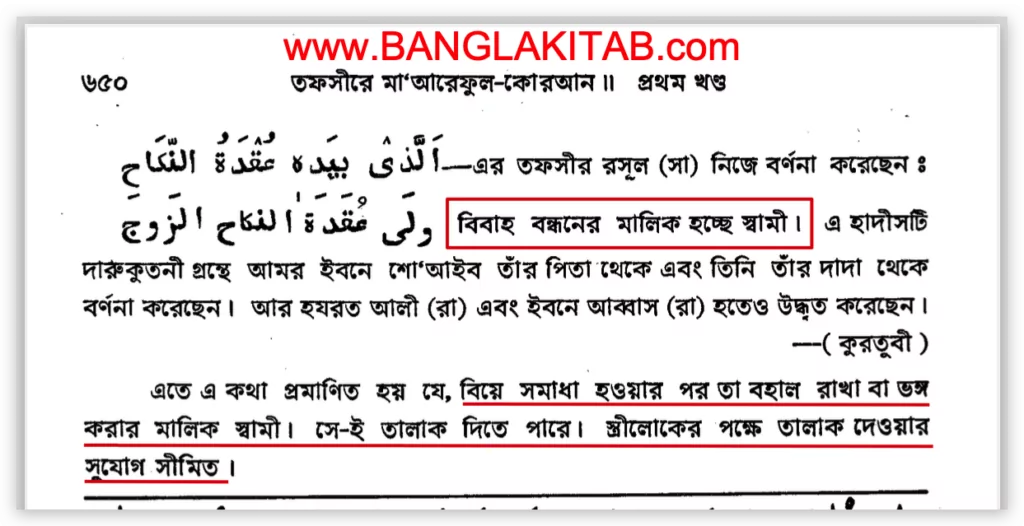
এর অর্থ হচ্ছে, ইসলামি শরিয়তের বিধান হচ্ছে, তালাক দেয়ার অধিকার একমাত্র স্বামীর। স্ত্রীর তালাক দেয়ার কোন অধিকার নেই, বিশেষ কিছু ক্ষেত্রে সে তালাক চাইতে পারে। সেখানেও আছে প্রবল সমস্যা (( মিশকাতুল মাসাবীহ (মিশকাত), হাদিস একাডেমি, হাদিসঃ ৩২৭৯ )) -

মিশকাতুল মাসাবীহ (মিশকাত)
অধ্যায়ঃ পর্ব-১৩ঃ বিবাহ
পাবলিশারঃ হাদিস একাডেমি
পরিচ্ছদঃ ১১. দ্বিতীয় অনুচ্ছেদ – খুল্‘ই (খুলা‘ তালাক) ও তালাক প্রসঙ্গে
৩২৭৯-(৬) সাওবান (রাঃ) হতে বর্ণিত। তিনি বলেন, রাসূলুল্লাহ সাল্লাল্লাহু আলাইহি ওয়াসাল্লাম বলেছেনঃ যে রমণী বিনা কারণে স্বামীর নিকট তালাক চায়, সে জান্নাতের গন্ধও পাবে না। (আহমাদ, তিরমিযী, আবূ দাঊদ, ইবনু মাজাহ, দারিমী)(1)
(1) সহীহ : আবূ দাঊদ ২২২৬, তিরমিযী ১১৮৭, ইবনু মাজাহ ২৫০০, দারিমী ১৩১৬, আহমাদ ২২৪৪০, ইরওয়া ২০৩৫, সহীহ আল জামি‘ ২৭০৬, সহীহ আত্ তারগীব ২০১৮।
হাদিসের মানঃ সহিহ (Sahih)
ব্যাখ্যাঃ
ব্যাখ্যা: তালাক স্বামীর অধিকার, স্ত্রীর নয়। স্ত্রীর সঙ্গত কারণ থাকলে খুলা‘র মাধ্যমে সে স্বামী থেকে বিচ্ছিন্ন হবে। কোনো মহিলা একান্ত কারণ ছাড়া স্বামীর কাছ থেকে তালাক প্রার্থনা করবে না। কোনো কোনো বর্ণনায় এ কথাও এসেছে, কোনো মহিলা নিজের জন্য অথবা অন্যের জন্য তালাক প্রার্থনা করবে না।
যে নারী বিনা কারণে তার স্বামীর কাছে তালাক প্রার্থনা করবে তার জন্য জান্নাতের ঘ্রাণ হারাম অর্থাৎ জান্নাতে প্রবেশ নিষিদ্ধ। এটা ভীতি ও ধমকিমূলক বাক্য। মুহসিন বা নেককারগণ যেমন প্রথম ধাপেই জান্নাতের সুঘ্রাণ পাবেন তারা সেই সুঘ্রাণ পাবে না। ‘আল্লামা কাযী ‘ইয়ায বলেনঃ এটাও হতে পারে যে, যদি সে জান্নাতে প্রবেশ করে তবে সুঘ্রাণ থেকে বঞ্চিত থাকবে। (মিরকাতুল মাফাতীহ)

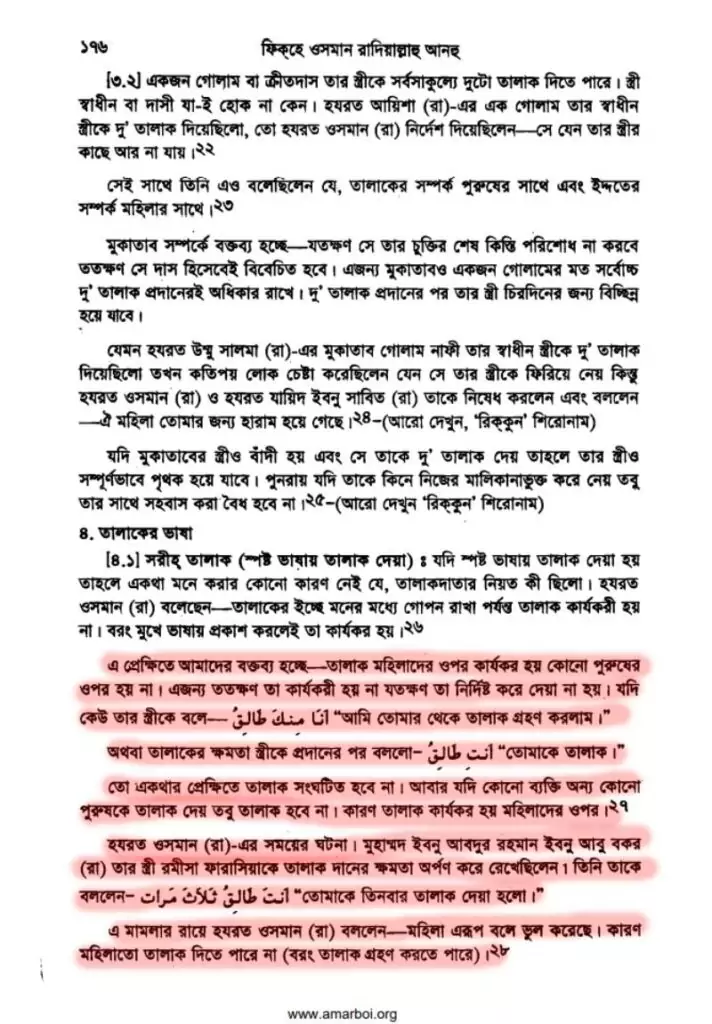
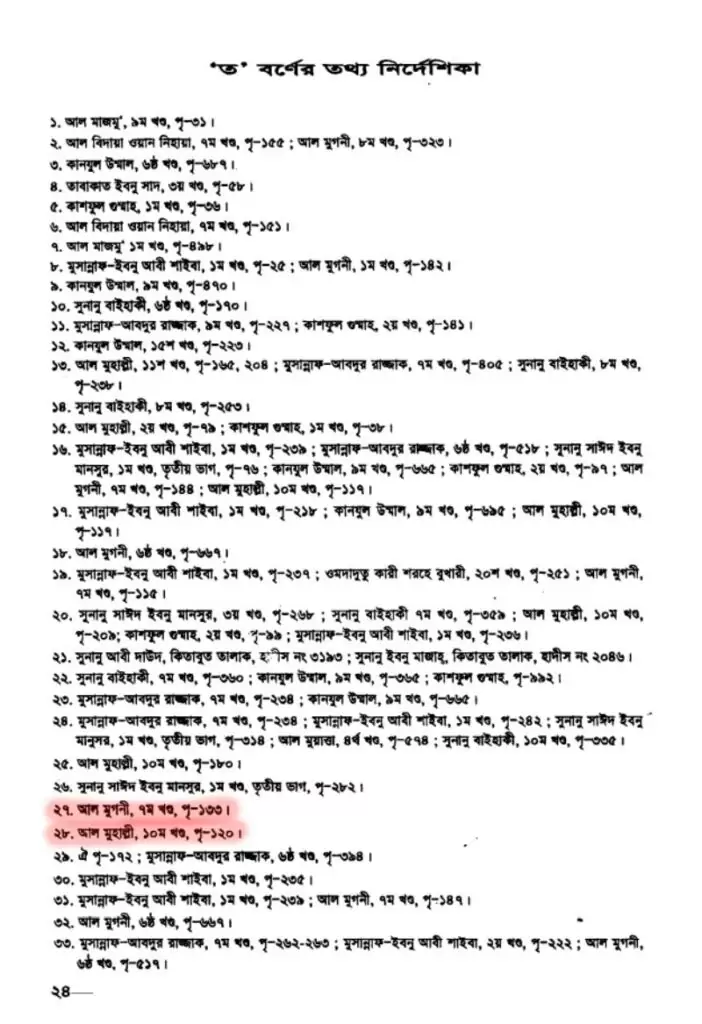
এবারে আসুন ফিকহে ওসমান রাদিয়াল্লাহু আনহু গ্রন্থ থেকে তৃতীয় খলিফা ওসমানের সময়ে আইনটি দেখে নিই, (( ফিকহে ওসমান রাদিয়াল্লাহু আনহু, ড মুহাম্মদ রাওয়াস কালা'জী, ভাষান্তর ও সম্পাদনাঃ মুহাম্মদ খলিলুল রহমান মুমিন, আধুনিক প্রকাশনী, পৃষ্ঠা ১৭৬ ))

এ প্রেক্ষিতে আমাদের বক্তব্য হচ্ছে— তালাক মহিলাদের ওপর কার্যকর হয় কোনো পুরুষের ওপর হয় না। এজন্য ততক্ষণ তা কার্যকরী হয় না যতক্ষণ তা নির্দিষ্ট করে দেয়া না হয়। যদি কেউ তার স্ত্রীকে বলে—... “আমি তোমার থেকে তালাক গ্রহণ করলাম।”
অথবা তালাকের ক্ষমতা স্ত্রীকে প্রদানের পর বললো-... “তোমাকে তালাক ।”
তো একথার প্রেক্ষিতে তালাক সংঘটিত হবে না। আবার যদি কোনো ব্যক্তি অন্য কোনো পুরুষকে তালাক দেয় তবু তালাক হবে না। কারণ তালাক কার্যকর হয় মহিলাদের ওপর। ২৭
হযরত ওসমান (রা)-এর সময়ের ঘটনা। মুহাম্মদ ইবনু আবদুর রহমান ইবনু আবু বকর (রা) তার স্ত্রী রমীসা ফারাসিয়াকে তালাক দানের ক্ষমতা অর্পণ করে রেখেছিলেন । তিনি তাকে বললেন- ... “তোমাকে তিনবার তালাক দেয়া হলো।”
এ মামলার রায়ে হযরত ওসমান (রা) বললেন— মহিলা এরূপ বলে ভুল করেছে। কারণ মহিলাতো তালাক দিতে পারে না (বরং তালাক গ্রহণ করতে পারে)।২৮
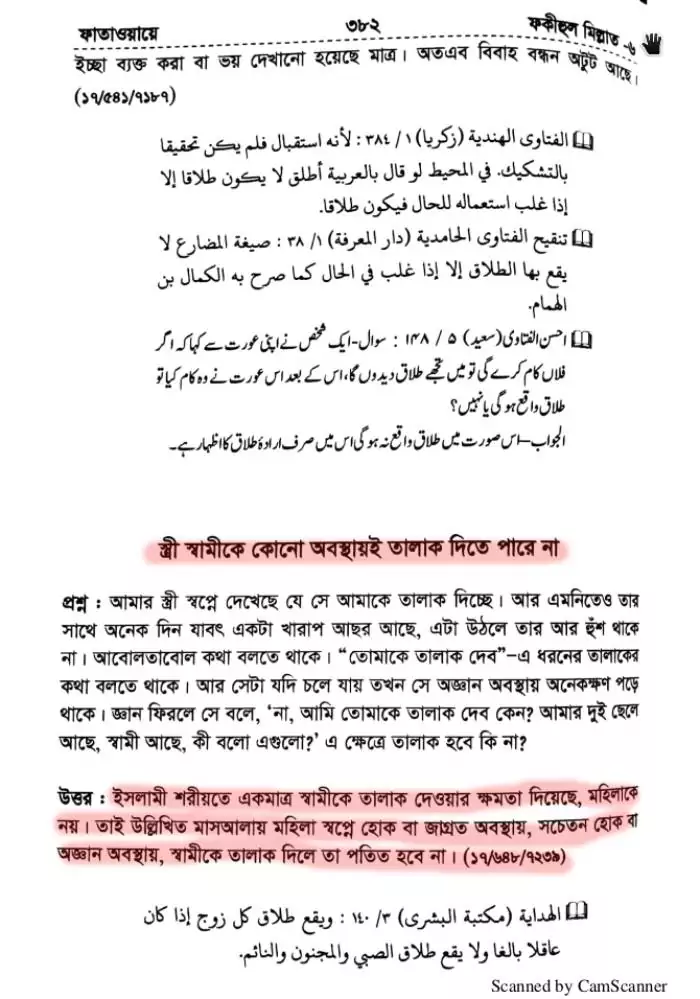
এবারে আসুন একটি ফতোয়া দেখে নিই (( ফাতাওয়ায়ে ফকীহুল মিল্লাত, খণ্ড ৬, পৃষ্ঠা ৩৮২ )) -

স্ত্রী স্বামীকে কোনো অবস্থায়ই তালাক দিতে পারে না
প্রশ্ন : আমার স্ত্রী স্বপ্নে দেখেছে যে সে আমাকে তালাক দিচ্ছে। আর এমনিতেও তার সাথে অনেক দিন যাবৎ একটা খারাপ আছর আছে, এটা উঠলে তার আর হুঁশ থাকে না। আবোলতাবোল কথা বলতে থাকে। “তোমাকে তালাক দেব”-এ ধরনের তালাকের কথা বলতে থাকে। আর সেটা যদি চলে যায় তখন সে অজ্ঞান অবস্থায় অনেকক্ষণ পড়ে থাকে। জ্ঞান ফিরলে সে বলে, 'না, আমি তোমাকে তালাক দেব কেন? আমার দুই ছেলে আছে, স্বামী আছে, কী বলো এগুলো?' এ ক্ষেত্রে তালাক হবে কি না?
উত্তর : ইসলামী শরীয়তে একমাত্র স্বামীকে তালাক দেওয়ার ক্ষমতা দিয়েছে, মহিলাকে নয়। তাই উল্লিখিত মাসআলায় মহিলা স্বপ্নে হোক বা জাগ্রত অবস্থায়, সচেতন হোক বা অজ্ঞান অবস্থায়, স্বামীকে তালাক দিলে তা পতিত হবে না। (১৭/৬৪৮/৭২৩৯)
স্ত্রী তালাক দিতে পারে না

ইসলামের প্রথাগত আইনঃ নারীর প্রতি বৈষম্য

তালাকের প্রথাগত ইসলামী আইনে স্ত্রীকে সম্পূর্ণভাবে তালাকের অধিকার থেকে বঞ্চিত করা হয়। এটি পুরুষের হাতে একতরফা ক্ষমতা তুলে দেয়, যা নারীর প্রতি একটি বড় ধরনের বৈষম্যের উদাহরণ। স্বামীর ক্ষমতার কারণে অনেক স্ত্রী নির্যাতনের শিকার হয়েও বিবাহ বন্ধন থেকে মুক্তি পেতে পারেন না। স্বামী তার স্ত্রীকে তালাক দিতে অস্বীকৃতি জানালে, স্ত্রীকে বিবাহ বন্ধনে আবদ্ধ থাকতে বাধ্য হতে হয়, যা তাদের স্বাধীনতা এবং সম্মানহানির কারণ হতে পারে।

নারী অধিকার এবং মানবাধিকারের দৃষ্টিতে, এই ধরনের বৈষম্যমূলক আইন সম্পূর্ণরূপে অগ্রহণযোগ্য। নারীরও পুরুষের সমানভাবে তালাকের অধিকার থাকা উচিত, কারণ বিবাহ একটি সামাজিক বন্ধন এবং এটি দুইজন মানুষের সম্মতি এবং সমান দায়িত্বের ওপর ভিত্তি করে গড়ে ওঠে। কিন্তু ইসলামের এই তালাক ব্যবস্থা নারীর উপর একতরফা কর্তৃত্ব আরোপ করে, যা তাদের নিজস্ব স্বাধীনতা এবং মর্যাদাকে ক্ষুণ্ন করে। ইসলাম কীভাবে একজন নারীর মানবিক মর্যাদাকে ধ্বংস করে, তার একটি নমুনা দেখি,

0:00
–:––

মানবাধিকার লঙ্ঘনঃ নারীর স্বাধীনতা খর্ব

আন্তর্জাতিক মানবাধিকার সনদ অনুযায়ী, প্রত্যেক ব্যক্তির সমানভাবে স্বাধীনতা, অধিকার এবং মর্যাদা পাওয়ার অধিকার রয়েছে। ১৯৪৮ সালের জাতিসংঘের মানবাধিকার ঘোষণা (Universal Declaration of Human Rights) এর ১৬তম অনুচ্ছেদে বলা হয়েছে, “বিবাহে প্রবেশ এবং বিচ্ছেদের ক্ষেত্রে নারী ও পুরুষের সমান অধিকার রয়েছে।” এ ঘোষণার মূল উদ্দেশ্য হলো—যেকোনো ধরনের বৈষম্য দূর করা এবং নারী ও পুরুষের সমান অধিকার প্রতিষ্ঠা করা।

কিন্তু ইসলামের প্রথাগত তালাক ব্যবস্থায় এই অধিকার নারীদের ক্ষেত্রে প্রয়োগ করা হয় না। একজন পুরুষ যদি যেকোনো সময় তার স্ত্রীকে তালাক দিতে পারেন, তাহলে একজন স্ত্রী কেন একই অধিকার প্রয়োগ করতে পারবেন না? এটি নারীর মৌলিক অধিকারকে লঙ্ঘন করে এবং তাকে বিবাহের সময় স্বামীর ইচ্ছার ওপর পুরোপুরি নির্ভরশীল করে তোলে। এমনকি খোলার প্রক্রিয়ায়ও যদি স্বামী স্ত্রীকে তালাক দিতে সম্মত না হন, তবে স্ত্রী বাধ্য হয়ে আদালতের শরণাপন্ন হতে পারেন, যা একটি দীর্ঘ ও জটিল প্রক্রিয়া।


সামাজিক ও মানসিক প্রভাব

তালাক প্রক্রিয়ায় এই ধরনের বৈষম্য শুধুমাত্র নারীর আইনি অধিকারকে খর্ব করে না, এটি তাদের মানসিক এবং সামাজিক জীবনকেও গভীরভাবে প্রভাবিত করে। অনেক নারী এই একতরফা আইন ব্যবস্থার কারণে অবর্ণনীয় মানসিক কষ্ট এবং অবহেলার শিকার হন। স্বামীর হাতে তালাকের ক্ষমতা থাকার ফলে নারীরা নিজেদের অধিকার রক্ষা করতে ব্যর্থ হন এবং অনেক সময় নিগ্রহ, নির্যাতন এবং মানসিক অত্যাচারের শিকার হয়েও বিবাহে আবদ্ধ থাকতে বাধ্য হন।

এই পরিস্থিতিতে, নারী ও পুরুষের সমানাধিকার নিয়ে সমাজে প্রশ্ন ওঠে। স্বামী যখন চাইলেই বিবাহ বন্ধন ছিন্ন করতে পারেন, অথচ স্ত্রীকে এই সিদ্ধান্ত নেওয়ার জন্য আদালতের মাধ্যমে প্রক্রিয়া সম্পন্ন করতে হয়, তখন এটি একটি প্রমাণ যে, নারীকে বিবাহ বন্ধনে বাধ্য করে রাখা হয় এবং তার ইচ্ছার প্রতি সম্মান প্রদর্শন করা হয় না। এ ধরনের বৈষম্যমূলক আইন নারীর ব্যক্তিত্ব, মর্যাদা এবং আত্মমর্যাদাকে চরমভাবে ক্ষুণ্ণ করে।


আধুনিক সমাজে নারীর অধিকার এবং স্বাধীনতা

আধুনিক সমাজে নারীরা বিভিন্ন ক্ষেত্রে পুরুষের সমান অংশগ্রহণ করছেন। শিক্ষা, কর্মসংস্থান, নেতৃত্ব এবং সামাজিক কর্মকাণ্ডে নারীরা পুরুষের মতোই গুরুত্বপূর্ণ ভূমিকা পালন করছেন। কিন্তু ইসলামের প্রথাগত তালাক ব্যবস্থায় নারীর সমানাধিকার এবং স্বাধীনতাকে উপেক্ষা করা হয়, যা আধুনিক সমাজের নীতি এবং মূল্যবোধের সাথে সাংঘর্ষিক। নারীর স্বাধীনতাকে খর্ব করা, তাকে একজন পুরুষের অধীনস্থ করে রাখা, এবং তার অধিকারকে অগ্রাহ্য করা একধরনের সামাজিক বৈষম্য এবং নিপীড়ন।

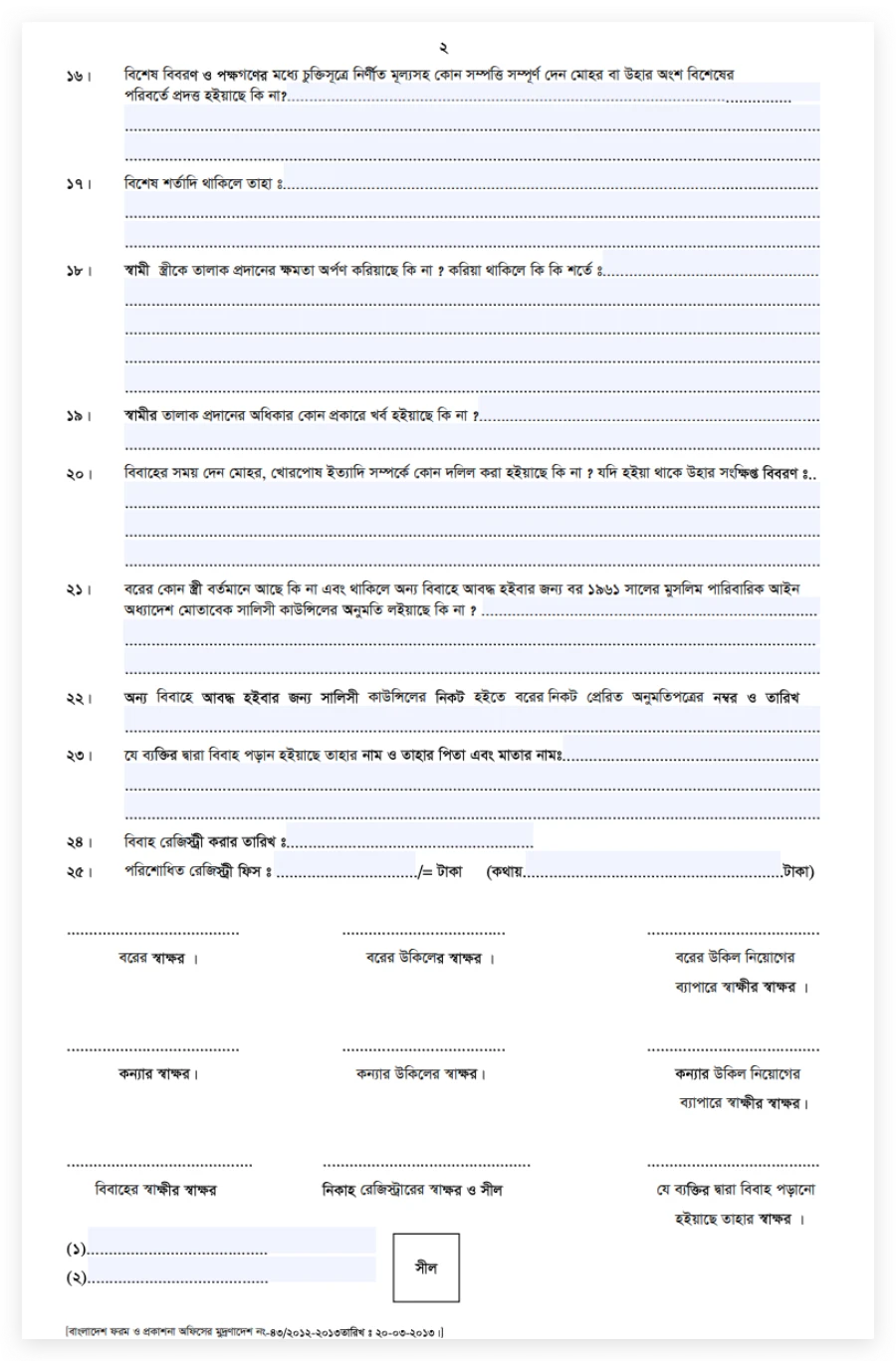
আধুনিক সমাজে নারীর অবস্থান এখন পুরুষের সমকক্ষ। নারী শিক্ষিত, কর্মক্ষেত্রে দক্ষ এবং স্বাবলম্বী। তাহলে কেন তাঁকে বিবাহ বিচ্ছেদের ক্ষেত্রে পুরুষের চেয়ে নিচু অবস্থানে রাখা হবে? নারীদের এই ধরনের বৈষম্যের বিরুদ্ধে লড়াই করার জন্য প্রয়োজন একটি আইনগত এবং সামাজিক পরিবর্তন। নারীদের স্বামীর মতোই তালাকের অধিকার থাকা উচিত, এবং বিবাহ বিচ্ছেদ তাদের ইচ্ছার ওপর ভিত্তি করে সমানভাবে নির্ধারণ করা উচিত। এইসব বাস্তব সমস্যা উপলব্ধি করেই, আইয়্যুব খান সরকার মুসলিম পারিবারিক আইনে স্ত্রীদের তালাক দেয়ার অধিকারটি যুক্ত করে। ইসলামি শরিয়ত এবং মুসলিম আইনকে সমন্বয় করার জন্য বর্তমান সময়ে নিকাহ নামাতে এটি স্পষ্টভাবে লিখিত থাকে যে, স্বামী স্ত্রীকে তালাক প্রদানের ক্ষমতা অর্পন করিয়াছেন কিনা।

উপসংহার

ইসলামের শরীয়া আইনে তালাক ব্যবস্থা নারীর মৌলিক অধিকার এবং মানবাধিকার লঙ্ঘন করে। স্বামী যদি যেকোনো সময় তালাক দিতে পারেন, তবে একজন স্ত্রী কেন একই অধিকার পেতে পারেন না? এটি একটি বৈষম্যমূলক আইন, যা নারীর স্বাধীনতাকে খর্ব করে এবং তাদের পুরুষের চেয়ে নিচু অবস্থানে রাখে। সুতরাং, ইসলামের প্রথাগত তালাক ব্যবস্থার এই বৈষম্য দূর করার জন্য প্রয়োজন সামাজিক এবং আইনগত পরিবর্তন। নারীদেরও সমানভাবে তালাকের অধিকার প্রাপ্ত হওয়া উচিত, যা তাদের স্বাধীনতা, মর্যাদা এবং সমানাধিকারকে নিশ্চিত করবে। আধুনিক সমাজকে ধর্মীয় অনুশাসনে আবদ্ধ না রেখে নারীর প্রকৃত অধিকারকে প্রতিষ্ঠা করাই আধুনিক সমাজের মূল লক্ষ্য হওয়া উচিত।

In Islamic Sharia, the Right to Divorce Belongs Only to the Husband

According to Islam, the primary control of the right to divorce has been vested in the husband's hands. The wife can only ask for divorce, but cannot divorce on her own

Introduction

Divorce or dissolution of marriage is an important part of married life. According to Islam, the primary control of the right to divorce has been vested in the husband's hands. The wife can only ask for divorce, but cannot divorce on her own. In this case, if a wife wants the right to divorce, the husband must consent to grant her that right. This is only a conditional right, which the husband can grant the wife in writing at the beginning of the marriage or at a later time. As a result, the wife is unable to make the decision of divorce independently and becomes dependent on the husband's mercy for divorce. Only in a few cases can a wife seek divorce of her own will, such as if the husband becomes an apostate (murtad) or goes insane. In this article, we will highlight the restrictions on women's rights in the divorce process, the human rights violations of this custom, and its problems in the light of women's equal rights in modern society. Note that this article is not discussing the Muslim Family Law in force in Bangladesh and Pakistan; the Muslim Family Law is the contribution of the Ayub Khan government. But the truth is that this law of Ayub Khan is a direct violation of Islamic Sharia.


Discrimination in the Right to Divorce: The Religious Context

According to Islamic law, the right to divorce rests unilaterally in the husband's hands. The husband can sever the marriage bond at any time, in any situation, by uttering the word "talaq" three times or by informing in writing. But the wife cannot exercise this right on her own. If the wife wants a divorce, she must go through the "khula" (the process of dissolution of marriage in which the wife applies to the husband for divorce) process. In this, the wife has to return her own property or dower (mahr), which sometimes puts her financial self-sufficiency at risk.

Let us see what is said in Tafsir Ma'ariful Quran, (( Tafsir Ma'ariful Quran, First Volume, Page 650 )) -

Page 650 of Tafsir Ma'ariful-Quran. First Volume
... —its tafsir was narrated by the Messenger (SA) himself :
The owner of the marriage bond is the husband. This hadith has been narrated in the book Daruqutni from Amr ibn Shu'ayb, from his father, and he from his grandfather. And it has also been quoted from Ali (RA) and Ibn Abbas (RA). — (Qurtubi)
From this it is proven that after the marriage is solemnized, the husband is the owner of keeping it valid or breaking it. He alone can give divorce. The opportunity for a woman to give divorce is limited.

This means that the ruling of Islamic Sharia is that the right to divorce belongs only to the husband. The wife has no right to divorce; in some special cases she can ask for divorce. Even there, there are serious problems (( Mishkat al-Masabih (Mishkat), Hadith Academy, Hadith: 3279 )) -

Mishkat al-Masabih (Mishkat)
Chapter: Volume 13: Marriage
Publisher: Hadith Academy
Section: 11. Second subsection - Concerning khul' (khula divorce) and divorce
3279-(6) Narrated from Thawban (RA). He said, the Messenger of Allah (peace be upon him) said: a woman who seeks divorce from her husband without any reason will not even smell the fragrance of Paradise. (Ahmad, Tirmidhi, Abu Dawud, Ibn Majah, Darimi)(1)
(1) Sahih: Abu Dawud 2226, Tirmidhi 1187, Ibn Majah 2500, Darimi 1316, Ahmad 22440, Irwa 2035, Sahih al-Jami' 2706, Sahih at-Targhib 2018.
Hadith grade: Sahih (Authentic)
Explanation:
Explanation: Divorce is the right of the husband, not the wife. If the wife has a valid reason, she will be separated from the husband through khula'. A woman will not seek divorce from her husband without an extreme reason. In some narrations it is also stated that no woman will seek divorce for herself or for someone else.
A woman who seeks divorce from her husband without any reason, the fragrance of Paradise is forbidden for her, meaning entry into Paradise is prohibited. This is a statement of warning and threat. Just as the muhsinun (righteous ones) will smell the fragrance of Paradise at the very first stage, she will not get that fragrance. Allama Qadi 'Iyad said: it may also be that if she enters Paradise, she will be deprived of the fragrance. (Mirqat al-Mafatih)

Now let us look at the law from the book Fiqh-e-Uthman (RA) from the time of the third Caliph Uthman, (( Fiqh-e-Uthman (RA), Dr. Muhammad Rawwas Qal'aji, translation and editing: Muhammad Khalilur Rahman Mumin, Adhunik Prakashani, Page 176 ))

In this context our statement is—divorce is effective upon women, not upon any man. For this reason it is not effective until it is specified. If someone says to his wife—... "I have taken divorce from you."
Or after granting the power of divorce to the wife, he said—... "You are divorced."
Then in the context of these words, divorce will not take place. Again, if a person gives divorce to another man, divorce will still not take place. Because divorce is effective upon women. 27
The incident of the time of Uthman (RA). Muhammad ibn Abdur Rahman ibn Abu Bakr (RA) had entrusted his wife Rumaysa al-Farasiyya with the power of divorce. He said to her—... "You are divorced three times."
In the verdict of this case, Uthman (RA) said— the woman made a mistake by saying this. Because a woman cannot give divorce (rather she can receive divorce). 28

Now let us look at a fatwa (( Fatawa-e-Fiqhul Millat, Volume 6, Page 382 )) -

A wife cannot divorce her husband in any situation
Question: My wife has seen in a dream that she is divorcing me. And besides, for many days she has been under a bad influence (asar); when it overcomes her, she loses her senses. She starts talking nonsense. She keeps saying words of divorce like "I will divorce you". And when it passes, she lies unconscious for a long time. When she regains consciousness, she says, 'No, why would I divorce you? I have two sons, I have a husband, what are you saying?' In this case, will the divorce take place or not?
Answer: In Islamic Sharia, only the husband has been given the power to divorce, not the woman. Therefore, in the mentioned case, whether the woman divorces the husband in a dream or in an awakened state, whether conscious or unconscious, it will not take effect. (17/648/7239)

স্ত্রী তালাক দিতে পারে না

Islam's Traditional Law: Discrimination Against Women

In the traditional Islamic law of divorce, the wife is completely deprived of the right to divorce. It places unilateral power in the hands of the man, which is an example of major discrimination against women. Because of the husband's power, many wives, even while suffering abuse, cannot free themselves from the marriage bond. If the husband refuses to divorce his wife, the wife is forced to remain bound in the marriage, which can be a cause of her loss of freedom and honor.

From the perspective of women's rights and human rights, such discriminatory law is completely unacceptable. Women should also have the right to divorce equally like men, because marriage is a social bond and it is built on the consent and equal responsibility of two people. But this divorce system of Islam imposes unilateral authority over women, which undermines their own freedom and dignity. Let us see a sample of how Islam destroys a woman's human dignity,

0:00
–:––

Human Rights Violation: Curtailing Women's Freedom

According to the international human rights charter, every person has the right to freedom, rights and dignity equally. Article 16 of the United Nations Universal Declaration of Human Rights (1948) states, "Men and women have equal rights in entering into marriage and in dissolution." The main purpose of this declaration is—to eliminate all kinds of discrimination and establish equal rights for women and men.

But in Islam's traditional divorce system, this right is not applied to women. If a man can divorce his wife at any time, then why cannot a wife exercise the same right? This violates women's fundamental rights and makes her completely dependent on the husband's will during marriage. Even in the khula process, if the husband does not agree to divorce the wife, the wife may be forced to take refuge in court, which is a long and complicated process.


Social and Psychological Impact

This kind of discrimination in the divorce process not only curtails women's legal rights, but also deeply affects their mental and social lives. Many women suffer unspeakable mental anguish and neglect because of this one-sided legal system. Because the power of divorce lies in the husband's hands, women fail to protect their rights and are often forced to remain bound in marriage even while suffering persecution, abuse and mental torture.

In this situation, questions arise in society about the equal rights of men and women. When a husband can sever the marriage bond whenever he wants, while the wife has to complete a process through the court to take this decision, then it is proof that women are kept forced in the marriage bond and their will is not respected. Such discriminatory law extremely undermines women's personality, dignity and self-respect.


Women's Rights and Freedom in Modern Society

In modern society, women are participating equally with men in various fields. In education, employment, leadership and social activities, women are playing roles as important as men. But in Islam's traditional divorce system, women's equal rights and freedom are ignored, which clashes with the principles and values of modern society. Curtailing women's freedom, keeping her subordinate to a man, and disregarding her rights is a kind of social discrimination and oppression.

In modern society, the position of women is now equal to men. Women are educated, skilled in the workplace and self-reliant. Then why should she be kept in a lower position than men in the matter of dissolution of marriage? To fight against such discrimination of women, a legal and social change is needed. Women should have the right to divorce just like the husband, and the dissolution of marriage should be determined equally on the basis of their will. Realizing these real problems, the Ayub Khan government added the right of wives to give divorce in the Muslim Family Law. In order to reconcile Islamic Sharia and Muslim law, it is now clearly written in the nikahnama whether the husband has delegated the power of divorce to the wife.


Conclusion

The divorce system in Islamic Sharia law violates women's fundamental rights and human rights. If a husband can divorce at any time, then why cannot a wife get the same right? This is a discriminatory law that curtails women's freedom and keeps them in a lower position than men. Therefore, social and legal change is needed to eliminate this discrimination in Islam's traditional divorce system. Women should also equally receive the right to divorce, which will ensure their freedom, dignity and equal rights. Instead of binding modern society in religious discipline, establishing women's true rights should be the main goal of modern society.

← তালিকায় ফিরে যান