SHONGSHOY翻訳 · আর্টিকেল ← INDEX
POST 3641522 April 2024

ইসলাম অনুসারে বন্ধ্যা নারীদের বিয়ে করা নিষেধ

একটি হাদিসে বর্ণিত আছে যে, নবী মুহাম্মদ বন্ধ্যা নারীদের বিয়ে করতে নিষেধ করেছিলেন, কারণ তারা সন্তান জন্মদানে সক্ষম নয়। এই হাদিসটি নারীদেরকে শুধুমাত্র সন্তান জন্মদানের একটি মেশিন হিসেবে বিবেচনা করে, যা তাদের প্রকৃত সক্ষমতা, মূল্যবোধ এবং স্বাধীনতা খর্ব করে

ভূমিকা

কোরআনের অনেক আয়াত এবং অনেক হাদিস, একই সাথে ইসলামী শরীয়া আইনে নারীর প্রতি যে দৃষ্টিভঙ্গি প্রকাশিত হয়েছে, তা আধুনিক সমাজের নারী অধিকার এবং মানবাধিকারের মৌলিক নীতির পরিপন্থী। ইসলামে নারীর ভূমিকা, তাদের অবস্থান, এবং পুরুষদের সাথে তাদের সম্পর্ককে অনেক ক্ষেত্রেই অত্যন্ত হেয়ভাবে উপস্থাপন করা হয়েছে। এর মধ্যে একটি হচ্ছে, হাদিসে বর্ণিত আছে নবী মুহাম্মদ বন্ধ্যা নারীদের বিয়ে করতে নিষেধ করেছিলেন, কারণ তারা সন্তান জন্মদানে সক্ষম নয়। এই হাদিসগুলো নারীদেরকে শুধুমাত্র সন্তান জন্মদানের একটি মেশিন হিসেবে বিবেচনা করে, যা তাদের প্রকৃত সক্ষমতা, মূল্যবোধ এবং স্বাধীনতা খর্ব করে। এই প্রবন্ধটিতে আমরা এই হাদিসের বৈষম্যমূলক দৃষ্টিভঙ্গি এবং এর মাধ্যমে নারীর প্রতি যে অপমান এবং অসম্মান করা হয়েছে, তা নিয়ে আলোচনা করবো এবং কেন এই ধরনের দৃষ্টিভঙ্গি নারীর মৌলিক অধিকার এবং সম্মানের পরিপন্থী, তা বিশ্লেষণ করবো।


নারীর ভূমিকাঃ সন্তান জন্মদানের মেশিন?

ইসলামী শাস্ত্রীয় ভাষ্যে নারীর মর্যাদা ও গ্রহণযোগ্যতা অনেকাংশেই তার প্রজনন সক্ষমতার ওপর নির্ভরশীল করে তোলা হয়েছে, যা তাকে মূলত একটি প্রজনন যন্ত্রের সমতুল্য করে তোলে। হাদিসের নির্দেশনা পর্যালোচনায় দেখা যায়, বন্ধ্যা নারীদের বিবাহে নিরুৎসাহিত করার মধ্য দিয়ে তাদের ব্যক্তিগত গুণাবলী বা মানবিক মর্যাদাকে গৌণ এবং প্রজনন উপযোগিতাকে মুখ্য হিসেবে বিবেচনা করা হয়েছে। সেই কারণে নবী মুহাম্মদ বন্ধ্যা নারীদের বিবাহ করতে নিষেধ করতে গেছেন। নারীর জন্য যা অত্যন্ত অবমাননাকর।

সূনান নাসাঈ (ইসলামিক ফাউন্ডেশন)
২৬/ নিকাহ (বিবাহ)
পরিচ্ছেদঃ ১১. বন্ধ্যা নারীকে বিবাহ করা অনুচিত
৩২৩০. আব্দুর রহমান ইবন খালিদ (রহঃ) … মা’কাল ইবন ইয়াসার (রাঃ) বলেন, এক ব্যক্তি রাসূলুল্লাহ্ সাল্লাল্লাহু আলাইহি ওয়াসাল্লাম এর খেদমতে আরয করলোঃ আমি এমন এক মহিলার সন্ধান পেয়েছি, যে বংশ গৌরবের অধিকারিণী ও মর্যাদাবান, কিন্তু সে বন্ধ্যা, আমি কি তাকে বিবাহ করবো? তিনি তাকে নিষেধ করলেন। দ্বিতীয় দিন তাঁর নিকট আসলে তিনি নিষেধ করলেন। এরপর তৃতীয় দিন তাঁর খেদমতে আসলে তিনি তাকে নিষেধ করলেন এবং বললেনঃ তোমরা অধিক সন্তান প্রসবা নারীকে বিবাহ করবে, যে তোমাদেরকে ভালবাসবে। কেননা, আমি তোমাদের দ্বারা সংখ্যাধিক্য লাভ করবো।
তাহক্বীকঃ হাসান। ইরওয়া ১৭৮৪, আদাবুয যিফাফ ১৬, সহীহ আবু দাউদ ১৭৮৯।
হাদিসের মানঃ হাসান (Hasan)
বর্ণনাকারীঃ মা‘ক্বিল ইবনু ইয়াসার (রাঃ)

সুনান আবূ দাউদ (তাহকিককৃত)
৬/ বিবাহ
পরিচ্ছেদঃ ৪. যে মহিলা সন্তান দিতে অক্ষম তাকে বিয়ে করা নিষেধ সম্পর্কে
২০৫০। মা‘কিল ইবনু ইয়াসার (রাযি.) সূত্রে বর্ণিত। তিনি বলেন, এক ব্যক্তি নবী সাল্লাল্লাহু আলাইহি ওয়াসাল্লাম-এর খিদমাতে উপস্থিত হয়ে বললো, আমি এক সুন্দরী ও মর্যাদা সম্পন্ন নারীর সন্ধান পেয়েছি। কিন্তু সে বন্ধ্যা। আমি কি তাকে বিয়ে করবো? তিনি বললেনঃ না। অতঃপর লোকটি দ্বিতীয়বার এসেও তাঁকে জিজ্ঞেস করলে তিনি তাকে নিষেধ করলেন। লোকটি তৃতীয়বার তাঁর নিকট এলে তিনি তাকে বললেনঃ এমন নারীকে বিয়ে করে যে, প্রেমময়ী এবং অধিক সন্তান প্রসবকারী। কেননা আমি অন্যান্য উম্মাতের কাছে তোমাদের সংখ্যাঘিধক্যের কারণে গর্ব করবো।(1)
হাসান সহীহ।
(1). নাসায়ী।
হাদিসের মানঃ হাসান (Hasan)
বর্ণনাকারীঃ মা‘ক্বিল ইবনু ইয়াসার (রাঃ)

অর্থাৎ, ইসলামে নারীর প্রতি দৃষ্টিভঙ্গি তাদের সন্তান জন্মদানের ক্ষমতার ওপর ভিত্তি করে নির্ধারণ করা হয়েছে। পুরুষতান্ত্রিক সমাজের এই প্রথাগত চিন্তাধারায় নারীদের ভূমিকা শুধুমাত্র সন্তান জন্মদান এবং পুরুষের যৌনসঙ্গী হওয়ার মধ্যে সীমাবদ্ধ ছিল। এই হাদিসে এর কারণ হিসেবে বলা হয়েছে, বন্ধ্যা নারী সন্তান জন্ম দিতে পারেন না, তাই তাদের মূল্য কম। এই দৃষ্টিভঙ্গি নারীদের প্রতি একধরনের গভীর অপমান এবং বৈষম্যের উদাহরণ। একটি সমাজ যখন নারীর মূল্যায়ন শুধুমাত্র তার সন্তান জন্মদানের ক্ষমতার ওপর ভিত্তি করে করে, তখন সেই সমাজের মূল্যবোধ এবং নারীর প্রতি দৃষ্টিভঙ্গির অবক্ষয় ঘটে। এটি প্রমাণ করে যে, নারীকে একটি পূর্ণাঙ্গ ব্যক্তি হিসেবে নয় বরং সন্তান জন্মদানের যন্ত্র হিসেবে দেখা হয়, যা তার স্বকীয়তা, মর্যাদা এবং স্বাধীনতাকে চরমভাবে খর্ব করে।


আলেমদের বক্তব্যঃ বন্ধ্যা নারী বিবাহ নিরুৎসাহিত

আসুন এই বিষয়ে আলেমদের বক্তব্য শুনি,

0:00
–:––
0:00
–:––

নবীর নিজ স্ত্রীকে বন্ধ্যা বলে দুর্ব্যবহার

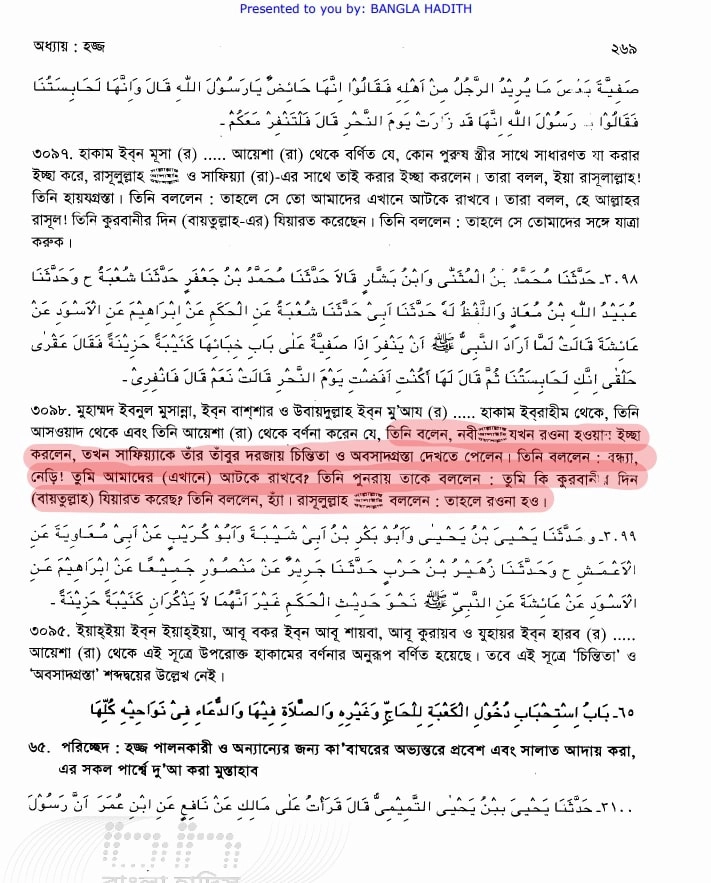
একজন স্ত্রী যখন সন্তান জন্ম দিতে পারেন না, সমাজে তিনি নানাভাবে অপমানিত এবং অপদস্থ হন এই কারণে। সমাজে তাকে বন্ধ্যা নারী বলে টিটকারি দেয়া হয়, তাকে এই ধরণের শব্দাবলী ব্যবহার করে অপমানিত করা হয়। যেন সন্তান জন্ম দিতে না পারলেই একজন নারীর আর কোন মূল্য নেই! তার জন্য সবচাইতে অপমানজনক এবং অসম্মানজনক গালিই হচ্ছে বন্ধ্যা বলে ডাকা। একজন সন্তানহীন নারীকে কোন মানবিক মানুষই এই কথাটি মনে করিয়ে দেন না। অথচ, নবী নিজেই তার স্ত্রীকে এই নিয়ে খোটা দিতেন, অপমান ও তুচ্ছ করে কথা বলতেন, গালি দিতেন (( সহীহ মুসলিম, ইসলামিক ফাউন্ডেশন, হাদিসঃ ৩০৯৮ )) (( সুনানে ইবনে মাজাহ, তাওহীদ পাবলিকেশন, হাদিসঃ ৩০৭৩ )) (( সহীহ মুসলিম, ইসলামিক ফাউন্ডেশন, তৃতীয় খণ্ড, পৃষ্ঠা ২৬৯, হাদিসঃ ৩০৯৮ )) -

সহীহ মুসলিম (ইফাঃ)
অধ্যায়ঃ ১৬/ হাজ্জ
পরিচ্ছদঃ ৬৪. বিদায়ী তাওয়াফ বাধ্যতামুলক কিন্তু ঋতুমতী মহিলার ক্ষেত্রে তা পরিত্যাজ্য
৩০৯৮। মুহাম্মাদ ইবনুল মুসান্না, ইবনু বাশশার ও উবায়দুল্লাহ ইবনু মু’আয (রহঃ) … হাকাম ইবরাহীম থেকে, তিনি আসওয়াদ থেকে এবং তিনি আয়িশা (রাঃ) থেকে বর্ণনা করেন যে, তিনি বলেন,নবী সাল্লাল্লাহু আলাইহি ওয়াসাল্লাম যখন রওনা হওয়ার ইচ্ছা করলেন, তখন সাফিয়্যাকে তাঁর তাঁবুর দরজায় চিন্তিতা ও অবসাদগ্রস্তা দেখতে পেলেন। তিনি বললেনঃ বন্ধ্যা, নেড়ি! তুমি আমাদের (এখানে) আটকে রাখবে? তিনি পুনরায় তাকে বললেনঃ তুমি কি কুরবানীর দিন (বায়তুল্লাহ) যিয়ারত করেছ? তিনি বললেন, হ্যাঁ। রাসুলুল্লাহ সাল্লাল্লাহু আলাইহি ওয়াসাল্লাম বললেনঃ তাহলে রওনা হও।
হাদিসের মানঃ সহিহ (Sahih)

সুনানে ইবনে মাজাহ
তাওহীদ পাবলিকেশন
অধ্যায়ঃ ১৯/ হজ্জ
পরিচ্ছদঃ ১৯/৮৩. ঋতুবতী স্ত্রীলোক বিদায়ী তাওয়াফ না করে প্রস্থান করতে পারে
২/৩০৭৩। আয়েশা (রাঃ) থেকে বর্ণিত। তিনি বলেন, রাসূলুল্লাহ সাল্লাল্লাহু আলাইহি ওয়াসাল্লাম সাফিয়্যা (রাঃ) সম্পর্কে জানতে চাইলে আমরা বললাম, সে ঋতুবতী হয়েছে। তিনি বলেনঃ বন্ধ্যা, ন্যাড়া, সে তো আমাদের আটকে ফেলেছে। আমি বললাম, ইয়া রাসূলাল্লাহ! তিনি কোরবানীর দিন তাওয়াফ করেছেন। তিনি বলেনঃ তাহলে অসুবিধা নেই। তোমরা তাকে রওনা হতে বলো।
সহীহুল বুখারী ৩২৮, ১৫৬১, ১৭৩৩, ১৭৫৭, ১৭৬২, ১৭৭২, ৪৪০১, ৫৩২৯, ৬১৫৭, ৭২২৯, মুসলিম ১২১১, তিরমিযী ৯৪৩, নাসায়ী ৩৯১, আবূ দাউদ ২০০৩, আহমাদ ২৩৫৮১, ২৩৫৮৯, ২৪০০৪, ২৪০৩৭, ২৪১৫৩, ২৪৩৮৫, ২৪৭৮১, ২৪৮৯৭, ২৪৯১৪, ২৪৯৯১, ২৫০৭৫, ২৫১৩৪, ২৫১৯৩, ২৫২৪৯, ২৫৩৪৭,২৫৪১৩, ২৫৬২৮, মুয়াত্তা মালেক ৯৪৩, ৯৪৫, দারেমী ৯৪২, ১৯১৭, ইরওয়া ৪/২৬১। তাহকীক আলবানীঃ সহীহ।
হাদিসের মানঃ সহিহ (Sahih)

নারীর সম্মান ও মূল্যবোধের অবমাননা

এই হাদিসটি নারীকে শুধুমাত্র তার শারীরিক ক্ষমতার ওপর নির্ভর করে মূল্যায়ন করে, যা অত্যন্ত অবমাননাকর এবং বৈষম্যমূলক। নারীর মূল্য কেবল তার সন্তান জন্মদানের ক্ষমতার মধ্যে সীমাবদ্ধ নয়। একটি নারী শিক্ষিত, বুদ্ধিমতী, সৃজনশীল এবং তার নিজের অধিকারে মূল্যবান। সন্তান জন্মদান একটি নারীর জীবনের একটি অংশ হতে পারে, কিন্তু এটি তার সম্পূর্ণতা নয়। এই হাদিস নারীদেরকে সামাজিক, অর্থনৈতিক, এবং বুদ্ধিবৃত্তিক ক্ষেত্রে অবমূল্যায়িত করে, এবং তাদেরকে শুধু রান্নাবান্না ও প্রজননের দায়িত্বে সীমাবদ্ধ করে রাখে। এভাবে নারীর ক্ষমতা, মর্যাদা, এবং অধিকারকে অগ্রাহ্য করা হয়, যা আধুনিক নারী অধিকারের নীতির সম্পূর্ণ বিপরীত। নারীর সক্ষমতা এবং মূল্যকে সন্তান জন্মদানের ক্ষমতা দ্বারা সীমাবদ্ধ করা নারীর প্রতি অবমাননা এবং অসম্মান।


সামাজিক প্রভাবঃ নারীর প্রতি বৈষম্য ও অসম্মান

এই ধরনের হাদিসের কারণে অনেক সমাজে নারীরা তাদের প্রকৃত অধিকার এবং মর্যাদার স্বীকৃতি পায় না। অনেক ক্ষেত্রে বন্ধ্যা নারী বা যারা সন্তান জন্ম দিতে সক্ষম নয়, তারা পরিবার এবং সমাজের চাপে হেয় প্রতিপন্ন হয় এবং তাদেরকে পুরুষদের দয়ার ওপর নির্ভর করে বেঁচে থাকতে হয়। এমনকি অনেক পুরুষ এই হাদিসকে ভিত্তি করে তাদের স্ত্রীর প্রতি দুর্ব্যবহার করেন এবং তাদের ছেড়ে অন্য নারীকে বিয়ে করেন, শুধুমাত্র সন্তান জন্মদানের উদ্দেশ্যে। পারিবারিক সহিংসতার শিকার অনেক নারীই অভিযোগ করেছে, স্বামী এবং স্বামীর পরিবারের সদস্যগণ তাদের প্রতি সহিংস হয়েছেন শুধুমাত্র এই কারণে যে, তারা সন্তান জন্ম দিতে সক্ষম নন। এই ধরনের বৈষম্যমূলক মনোভাব নারীর আত্মবিশ্বাস এবং মর্যাদাকে ক্ষুণ্ণ করে। একজন নারীকে শুধুমাত্র সন্তান জন্মদানের মেশিন হিসেবে দেখা হলে, তার ব্যক্তিত্ব এবং মানসিকতার প্রতি বড় ধরণের অসম্মান প্রদর্শন করা হয়। সমাজের এই দৃষ্টিভঙ্গি নারীর মানসিক স্বাস্থ্যকেও বিপর্যস্ত করে এবং তাকে সামাজিকভাবে প্রান্তিক করে তোলে।


নবী মুহাম্মদের নিজস্ব প্রজনন ক্ষমতা নিয়ে প্রশ্ন

নবী মুহাম্মদ যেহেতু নিজেই অন্য নারীর প্রজনন ক্ষমতার ওপর ভিত্তি করে কোন নারীকে বিবাহ করা যাবে কি যাবে না, এরকম পরামর্শ দিতেন, সেহেতু নবী মুহাম্মদের নিজের প্রজনন ক্ষমতা নিয়েও তাই প্রশ্ন তোলা অন্যায় নয়। ইসলামী সূত্রগুলো অনুসারে, মুহাম্মদের প্রথম স্ত্রী খাদিজা বিনতে খুয়াইলিদের সাথে তার ছয় থেকে সাতটি সন্তান হয়েছিল: তিনটি ছেলে (কাসিম, আব্দুল্লাহ, এবং কিছু সূত্রে তায়িব বা তাহির) এবং চারটি মেয়ে (জায়নাব, রুকাইয়া, উম্ম কুলসুম, এবং ফাতিমা)। খাদিজার মৃত্যুর পর (খ্রিষ্টাব্দ ৬১৯ সালের দিকে), মুহাম্মদ কমপক্ষে ১১ জন স্ত্রী এবং কয়েকজন দাসী (কনকুবাইন) নিয়েছিলেন, কিন্তু এদের মধ্যে শুধুমাত্র মারিয়া আল-কিবতিয়া (যিনি একজন কপটিক খ্রিষ্টান দাসী ছিলেন) থেকে একটি ছেলে ইব্রাহিমের জন্ম হয় (খ্রিষ্টাব্দ ৬৩০ সালে), যে শিশুকালে (১৮ মাস বয়সে) মারা যায়। অন্য কোনো স্ত্রী বা দাসীর গর্ভে তার আর কোনো সন্তান হয়নি, যা তার পরবর্তী জীবনে প্রজনন ক্ষমতার অভাব নির্দেশ করতে পারে। আধুনিক চিকিৎসা বিজ্ঞানের দৃষ্টিকোণ থেকে, এমন একাধিক যৌন সঙ্গিনী থাকা সত্ত্বেও সন্তান না হওয়া পুরুষের ইনফার্টিলিটি (যেমন লো স্পার্ম কাউন্ট বা অন্যান্য শারীরিক সমস্যা) এর লক্ষণ হতে পারে, যদিও সপ্তম শতাব্দীর এই ঘটনার কোন মেডিকাল প্রমাণ আমাদের কাছে নেই—এটি শুধুমাত্র যুক্তিভিত্তিক অনুমান।

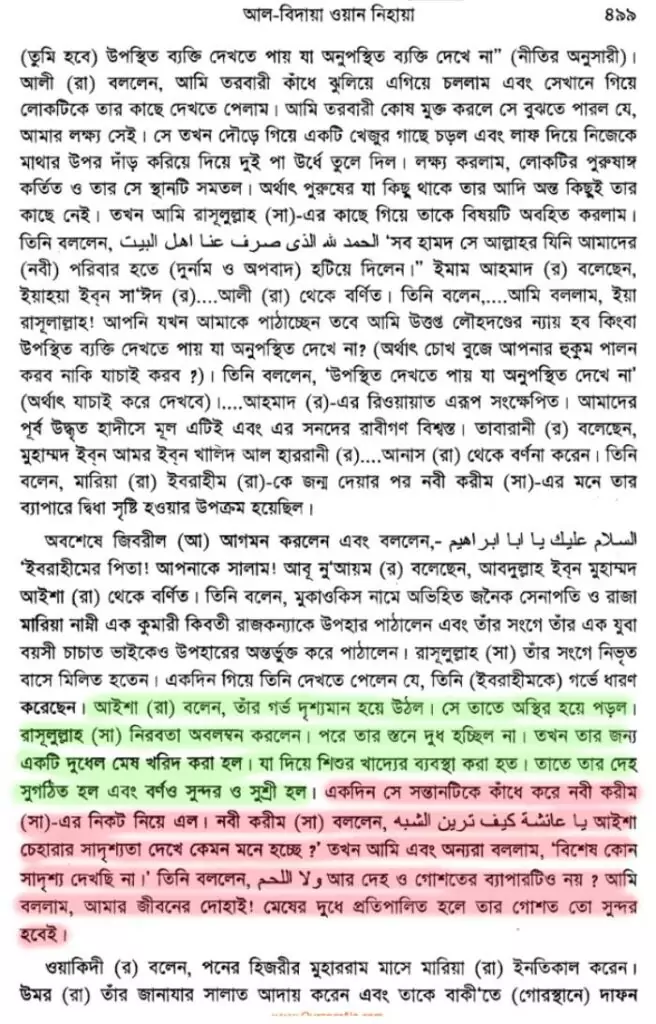
এছাড়া, ইসলামী ঐতিহাসিক বর্ণনায় উল্লেখ আছে যে, মুহাম্মদের স্ত্রী আয়িশা ইব্রাহিমকে দেখে বলেছিলেন যে শিশুটির চেহারায় মুহাম্মদের সাথে কোনো মিল নেই। এই মন্তব্যটি আয়িশার ঈর্ষা থেকে উদ্ভূত হতে পারে, কারণ মারিয়া অন্য স্ত্রীদের মতো নয়—তিনি একজন দাসী ছিলেন এবং তার গর্ভে সন্তান হওয়ায় অন্য স্ত্রীদের মধ্যে অসন্তোষ দেখা দিয়েছিল। তবে এই বক্তব্য থেকে অনুমান করা যায় যে মুহাম্মদের স্ত্রীরা তার প্রজনন ক্ষমতা নিয়ে সচেতন বা সন্দিহান ছিলেন, কারণ অন্য কোনো স্ত্রীর গর্ভে সন্তান না হওয়ার পরিপ্রেক্ষিতে ইব্রাহিমের পিতৃত্ব নিয়ে প্রশ্ন উঠেছে। এটি বিভিন্ন ঐতিহাসিক বর্ণনায় পাওয়া যায়, যেখানে মুহাম্মদ নিজে আয়িশাকে শিশুটির সাথে তার মিল দেখাতে চেয়েছিলেন, কিন্তু আয়িশা তা অস্বীকার করেন। এই ঘটনা মুহাম্মদের জীবনের শেষের দিকের (খ্রিষ্টাব্দ ৬৩০-৬৩২), যখন তার বয়স ৫৯-৬২ বছরের মধ্যে ছিল, এবং বয়সজনিত কারণে প্রজনন ক্ষমতা হ্রাস পাওয়া যুক্তিসঙ্গত (( আল বিদায়া ওয়ান নিহায়া, পঞ্চম খণ্ড, ইসলামিক ফাউন্ডেশন বাংলাদেশ, পৃষ্ঠা ৪৯৯ )) -

অবশেষে জিবরীল (আ) আগমন করলেন এবং বললেন,- السلام عليك يا أبا ابراهیم 'ইবরাহীমের পিতা! আপনাকে সালাম! আবূ নু'আয়ম (র) বলেছেন, আবদুল্লাহ ইব্‌ন মুহাম্মদ আইশা (রা) থেকে বর্ণিত। তিনি বলেন, মুকাওকিস নামে অভিহিত জনৈক সেনাপতি ও রাজা মারিয়া নাম্নী এক কুমারী কিবতী রাজকন্যাকে উপহার পাঠালেন এবং তাঁর সংগে তাঁর এক যুবা বয়সী চাচাত ভাইকেও উপহারের অন্তর্ভুক্ত করে পাঠালেন। রাসূলুল্লাহ (সা) তাঁর সংগে নিভৃত বাসে মিলিত হতেন। একদিন গিয়ে তিনি দেখতে পেলেন যে, তিনি (ইবরাহীমকে) গর্ভে ধারণ করেছেন। আইশা (রা) বলেন, তাঁর গর্ভ দৃশ্যমান হয়ে উঠল। সে তাতে অস্থির হয়ে পড়ল। রাসূলুল্লাহ (সা) নিরবতা অবলম্বন করলেন। পরে তার স্তনে দুধ হচ্ছিল না। তখন তার জন্য একটি দুধেল মেষ খরিদ করা হল। যা দিয়ে শিশুর খাদ্যের ব্যবস্থা করা হত। তাতে তার দেহ সুগঠিত হল এবং বর্ণও সুন্দর ও সুশ্রী হল। একদিন সে সন্তানটিকে কাঁধে করে নবী করীম )সা)-এর নিকট নিয়ে এল। নবী করীম (সা) বললেন, يا عائشة كيف ترين الشبه আইশা চেহারার সাদৃশ্যতা দেখে কেমন মনে হচ্ছে?' তখন আমি এবং অন্যরা বললাম, 'বিশেষ কোন সাদৃশ্য দেখছি না।' তিনি বললেন, ولا اللحم আর দেহ ও গোশতের ব্যাপারটিও নয়? আমি বললাম, আমার জীবনের দোহাই! মেষের দুধে প্রতিপালিত হলে তার গোশত তো সুন্দর হবেই।
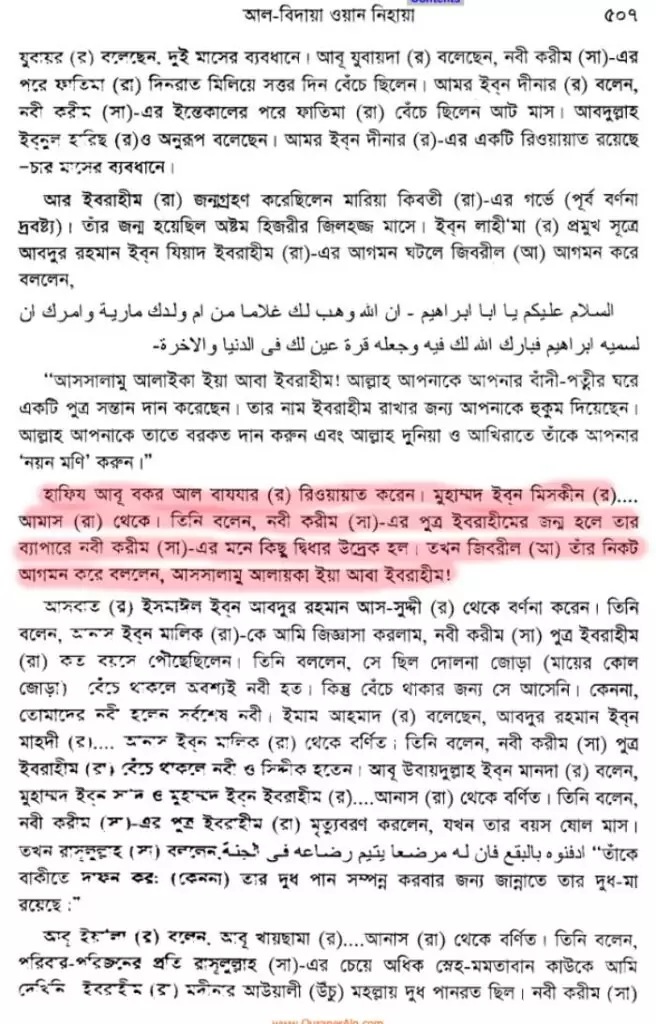
শুধু আয়িশার মনেই যে এই সন্দেহ ছিল তা নয়। মারিয়ার সন্তান ইব্রাহিমের পিতা কে, এই নিয়ে সন্দেহ ছিল খোদ নবীর মনেও। পরে নাকি জিব্রাইল এসে নবীকে বলে দেয়, এই বাচ্চাটি নবীরই বাচ্চা! অর্থাৎ ইসলামের দলিল থেকেই জানা যায়, খোদ নবীর মনেও এই নিয়ে সন্দেহ ছিল (( আল বিদায়া ওয়ান নিহায়া, পঞ্চম খণ্ড, ইসলামিক ফাউন্ডেশন বাংলাদেশ, পৃষ্ঠা ৫০৭ ))

আর ইবরাহীম (রা) জন্মগ্রহণ করেছিলেন মারিয়া কিবতী (রা)-এর গর্ভে (পূর্ব বর্ণনা দ্রবষ্ট্য)। তাঁর জন্ম হয়েছিল অষ্টম হিজরীর জিলহজ্জ মাসে। ইব্‌ন লাহী'মা (র) প্রমুখ সূত্রে আবদুর রহমান ইবন যিয়াদ ইবরাহীম (রা)-এর আগমন ঘটলে জিবরীল (আ) আগমন করে বললেন,
السلام عليكم يا ابا ابراهيم - ان الله وهب لك غلاما من ام ولدك مارية وامرك ان لسميه ابراهيم فبارك الله لك فيه وجعله قرة عين لك في الدنيا والآخرة
"আসসালামু আলাইকা ইয়া আবা ইবরাহীম! আল্লাহ আপনাকে আপনার বাঁদী-পত্নীর ঘরে একটি পুত্র সন্তান দান করেছেন। তার নাম ইবরাহীম রাখার জন্য আপনাকে হুকুম দিয়েছেন। আল্লাহ আপনাকে তাতে বরকত দান করুন এবং আল্লাহ দুনিয়া ও আখিরাতে তাঁকে আপনার 'নয়ন মণি' করুন।"
হাফিয আবূ বকর আল বাযযার (র) রিওয়ায়াত করেন। মুহাম্মদ ইব্‌ন মিসকীন (র)…. আমাস (রা) থেকে। তিনি বলেন, নবী করীম (সা)-এর পুত্র ইবরাহীমের জন্ম হলে তার ব্যাপারে নবী করীম (সা)-এর মনে কিছু দ্বিধার উদ্রেক হল। তখন জিবরীল (আ) তাঁর নিকট আগমন করে বললেন, আসসালামু আলায়কা ইয়া আবা ইবরাহীম!
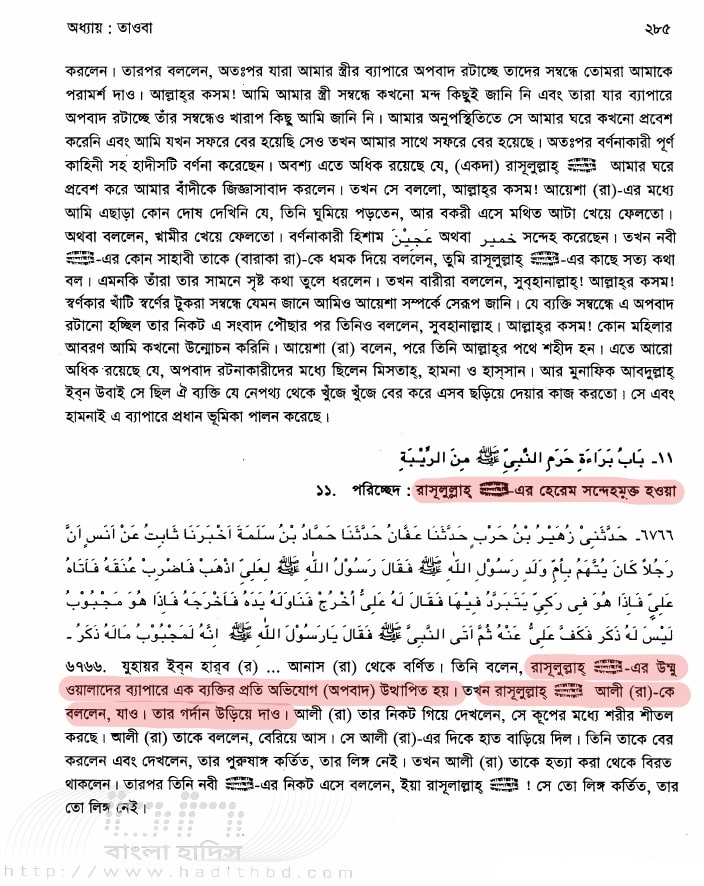
এবারে আসুন সহিহ মুসলিম শরীফ থেকে আরেকটি হাদিস পড়ে নিই। এই হাদিস থেকে জানা যায়, নবী মুহাম্মদের উম্মে ওয়ালাদ বা মারিয়া কিবতিয়ার সাথে এক ব্যক্তির যৌন সম্পর্কের অভিযোগ শুনেই নবী মুহাম্মদ কোন বিচার আচার সাক্ষী সাবুদের তোয়াক্কা না করে হযরত আলীকে পাঠায় সেই ব্যক্তিকে খুন করে আসার জন্য। অথচ ইসলামী শরীয়তের বিধান হচ্ছে, ব্যাভিচারের জন্য চারজন পুরুষ সাক্ষীর সাক্ষ্য দিতে হয় যে, যারা সুরমা দানীর মধ্যে সুরমা শলাকা যেভাবে প্রবেশ করে সেইভাবে ব্যভিচারের ঘটনা প্রত্যক্ষ করেছে (( ইসলামি শরিয়তে ধর্ষণের শাস্তি ))। অথচ মারিয়া কিবতিয়ার সাথে আরেক লোকের সম্পর্ক আছে, এরকম শুনেই নবী তাকে খুন করার জন্য মরিয়া হয়ে ওঠে। এ থেকে পরিষ্কার হয়, মারিয়া কিবতিয়াকে নিয়ে খোদ নবীর মনেও নানা সন্দেহ ছিল। নতুবা এরকম অভিযোগ শুনলে প্রথমেই একজন মানুষের প্রমাণ চাওয়ার কথা। ভেবে দেখুন, আপনার স্ত্রীর সাথে আরেকজন লোকের সম্পর্ক আছে, এরকম শোনামাত্রই আপনি সেই লোককে খুন করতে কেন লোক পাঠাবেন? যদি আগে থেকেই মনে সন্দেহ না থেকে থাকে? আর যদি সন্দেহ না থাকে, তাহলে প্রথমেই আপনি নিশ্চয়ই সাক্ষী প্রমাণ চাইবেন, তাই না? (( সহীহ মুসলিম, ইসলামিক ফাউন্ডেশন, হাদিসঃ ৬৭৬৬ )) (( সহিহ মুসলিম, ইসলামিক ফাউন্ডেশন, খণ্ড ৬, পৃষ্ঠা ২৮৫ ))

সহীহ মুসলিম (ইসলামিক ফাউন্ডেশন)
৫১/ তাওবা
পরিচ্ছেদঃ ১১. রাসুলুল্লাহ (ﷺ) এর হেরেম সন্দেহমুক্ত হওয়া
৬৭৬৬। যুহায়র ইবনু হারব (রহঃ) ... আনাস (রাঃ) থেকে বর্ণিত। তিনি বলেন, রাসুলুল্লাহ সাল্লাল্লাহু আলাইহি ওয়াসাল্লাম এর উম্মে ওয়ালাদের সাথে এক ব্যক্তির প্রতি অভিযোগ (অপবাদ) উত্থাপিত হয়। তখন রাসুলুল্লাহ সাল্লাল্লাহু আলাইহি ওয়াসাল্লাম আলী (রাঃ) কে বললেন, যাও। তার গর্দান উড়িয়ে দাও। আলী (রাঃ) তার নিকট গিয়ে দেখলেন, সে কুপের মধ্যে শরীর শীতল করছে। আলী (রাঃ) তাকে বললেন, বেরিয়ে আস। সে আলী (রাঃ)এর দিকে হাত বাড়িয়ে দিল। তিনি তাকে বের করলেন এবং দেখলেন, তার পূরুষাঙ্গ কর্তিত, তার লিঙ্গ নেই। তখন আলী (রাঃ) তাকে হত্যা করা থেকে বিরত থাকলেন। তারপর তিনি নবী সাল্লাল্লাহু আলাইহি ওয়াসাল্লাম এর নিকট এসে বললেন, ইয়া রাসুলাল্লাহ! সে তো লিঙ্গ কর্তিত তার তো লিঙ্গ নেই।
হাদিসের মানঃ সহিহ (Sahih)
বর্ণনাকারীঃ আনাস ইবনু মালিক (রাঃ)

যদি এই বর্ণনাগুলো সত্য হয়, তাহলে হাদিসে বন্ধ্যা নারীদের বিয়ে নিষেধ করার পরামর্শ (যেমন সুনান নাসাই ৩২২৭) মুহাম্মদের নিজস্ব অভিজ্ঞতার সাথে সাংঘর্ষিক, কারণ খাদিজার মৃত্যুর পরে নবী নিজেই বেশি সন্তান উৎপাদনে সক্ষম ছিলেন না, বা কোন বাচ্চাই উৎপাদনে সক্ষম ছিলেন না। কিন্তু লাগাতার একের পর এক বিবাহ করেছেন, দাসীও রেখেছেন। সেগুলো তিনি কেন করেছেন, এই প্রশ্ন তো উঠবেই। ইসলামিক বা রক্ষণশীল পুরুষতান্ত্রিক সমাজে অবশ্য পুরুষের সন্তান জন্মদানে অক্ষমতা বা ইনফার্টিলিটিকে উপেক্ষা করা হয়। আর নারীর ক্ষেত্রে অত্যন্ত অপমান এবং অবমাননামূলক দৃষ্টিভঙ্গি প্রকাশ করে।


আধুনিক ইসলামিক অ্যাপোলজিস্টদের জবাব

অনেক আধুনিক অ্যাপোলজিস্টরা দাবী করেন যে, নবী মুহাম্মদের এই বক্তব্যটি কোন কঠোর নিষেধাজ্ঞা নয়, এটি শুধুমাত্র একটি সাধারণ পরামর্শ। কিন্তু হাদিস থেকে কিন্তু এটি খুব সাধারণ পরামর্শ, তা মনে হয় না। তারপরেও যদি সেটি ধরে নিই, অর্থাৎ আধুনিক ইসলামিক অ্যাপোলজিস্টদের দাবি অনুসারে এটি যদি কোনো কঠোর নিষেধাজ্ঞা না হয়ে কেবল একটি পরামর্শও হয়ে থাকে, তবুও এই নিবন্ধের মূল যুক্তিটি অটুট থাকে। কারণ, পরামর্শের আড়ালেও এই বক্তব্যটি নবীর এক চরম পুরুষতান্ত্রিক মানসিকতা এবং সামগ্রিকভাবে ইসলামের প্রজনন-কেন্দ্রিক মনস্তত্ত্বকে অত্যন্ত নগ্নভাবে প্রকাশ করে। কোনো ধর্মীয় নেতার পক্ষ থেকে যখন কোনো বিষয়কে ‘পরামর্শ’ হিসেবে প্রদান করা হয়, তখন তা অনুসারীদের জন্য একটি নৈতিক ও সামাজিক আদর্শ (Normative Ideal) হিসেবে প্রতিষ্ঠিত হয়। এখানে বিবাহকে ব্যক্তিগত ভাল্পবাসা, আবেগ বা মানবিক সাহচর্যের পরিবর্তে একটি রাজনৈতিক ও জনতাত্ত্বিক হাতিয়ার হিসেবে দেখা হয়েছে, যেখানে নারীর একমাত্র সার্থকতা হলো সংখ্যাবৃদ্ধির মাধ্যমে উম্মাহর শক্তিবৃদ্ধি করা। এই ধরণের ‘পরামর্শ’ মুসলিম সমাজে বন্ধ্যা নারীদের প্রতি এক ধরণের কাঠামোগত অবজ্ঞা তৈরি করে এবং তাদের সামাজিকভাবে প্রান্তিক ও ‘ত্রুটিপূর্ণ’ মানুষ হিসেবে চিহ্নিত করতে প্রত্যক্ষ ভূমিকা পালন করে। ফলে এটি সরাসরি নিষেধাজ্ঞা হোক বা অনুপ্রেরণামূলক পরামর্শ—উভয় ক্ষেত্রেই এটি নারীকে কেবল একটি প্রজনন যন্ত্রে রূপান্তরিত করার পুরুষতান্ত্রিক আকাঙ্ক্ষাকেই বৈধতা দেয়।


উপসংহার

ইসলামের এইসকল হাদিসে নারীর প্রতি যে বৈষম্যমূলক দৃষ্টিভঙ্গি প্রকাশিত হয়েছে, তা আধুনিক সমাজের নারী অধিকার এবং মানবাধিকার নীতির পরিপন্থী। সন্তান জন্মদানের ক্ষমতা দ্বারা নারীর মূল্যায়ন করা শুধু বৈষম্যপূর্ণ নয়, এটি নারীর প্রতি চরম অবমাননা। নারীদেরকে তাদের প্রকৃত অবস্থানে মূল্যায়ন করতে হবে, যেখানে তারা সমাজের একটি পূর্ণাঙ্গ এবং সমান অধিকারভোগী মানুষ হিসেবে প্রতিষ্ঠা পাবে।

ধর্মের নামে নারীর প্রতি এই ধরনের বৈষম্য দূর করতে হলে প্রয়োজন সামাজিক এবং আইনগত পরিবর্তন। নারীদের সম্মান ও মর্যাদাকে পুনঃপ্রতিষ্ঠিত করতে হবে, এবং তাদের মৌলিক অধিকার রক্ষার জন্য পুরুষতান্ত্রিক দৃষ্টিভঙ্গিকে পরিবর্তন করতে হবে। নারীদেরকে সন্তান জন্মদানের মেশিন হিসেবে নয়, বরং পূর্ণাঙ্গ, স্বাধীন এবং সমান মর্যাদাসম্পন্ন মানুষ হিসেবে বিবেচনা করাই একটি আধুনিক ও মানবিক সমাজের মূল ভিত্তি হওয়া উচিত।

According to Islam, Marrying Barren Women Is Forbidden

It is narrated in a hadith that the Prophet Muhammad forbade marrying barren women, because they are incapable of bearing children. This hadith considers women merely as a machine for bearing children, which curtails their true capability, values and freedom

Introduction

Many verses of the Quran and many hadiths, along with the perspective expressed towards women in Islamic Sharia law, are contrary to the fundamental principles of women's rights and human rights in modern society. In Islam, women's role, their position, and their relationship with men have in many cases been presented in an extremely contemptible manner. One of these is that it is narrated in the hadith that the Prophet Muhammad forbade marrying barren women, because they are incapable of bearing children. These hadiths consider women merely as a machine for bearing children, which curtails their true capability, values and freedom. In this article, we will discuss the discriminatory perspective of this hadith and the insult and disrespect shown towards women through it, and analyze why this kind of perspective is contrary to women's fundamental rights and honor.


Women's Role: A Childbearing Machine?

In Islamic scriptural discourse, women's dignity and acceptability have largely been made dependent on their reproductive capacity, which essentially equates her to a reproduction machine. Reviewing the instructions of the hadith, it is seen that by discouraging marriage to barren women, their personal qualities or human dignity have been considered secondary and reproductive utility primary. For that reason, the Prophet Muhammad forbade marrying barren women. This is extremely degrading for women.

Sunan an-Nasa'i (Islamic Foundation)
26/ Nikah (Marriage)
Section: 11. It is improper to marry a barren woman
3230. Abdur Rahman ibn Khalid (RA) … Ma'qil ibn Yasar (RA) said, a man submitted to the Messenger of Allah (peace be upon him): I have found a woman who is noble in lineage and honorable, but she is barren; shall I marry her? He forbade him. When he came to him the second day, he forbade him. Then when he came to his service the third day, he forbade him and said: marry women who are prolific in childbearing, who will love you. For, I will take pride in your large numbers.
Tahqiq: Hasan. Irwa 1784, Adab al-Zifaf 16, Sahih Abu Dawud 1789.
Hadith grade: Hasan (Authentic)
Narrator: Ma'qil ibn Yasar (RA)

Sunan Abu Dawud (verified)
6/ Marriage
Section: 4. Concerning the prohibition of marrying a woman who is unable to bear children
2050. Narrated from Ma'qil ibn Yasar (RA). He said, a man came to the service of the Prophet (peace be upon him) and said: I have found a beautiful and honorable woman. But she is barren. Shall I marry her? He said: no. Then the man came a second time and asked him, and he forbade him. When the man came to him the third time, he told him: marry a woman who is loving and prolific in childbearing. For, I will boast of your large numbers before the other nations.(1)
Hasan Sahih.
(1). Nasa'i.
Hadith grade: Hasan (Authentic)
Narrator: Ma'qil ibn Yasar (RA)

That is, in Islam, the perspective towards women has been determined on the basis of their capacity to bear children. In this traditional mindset of patriarchal society, women's role was confined only to bearing children and being men's sexual partners. In this hadith, it is stated as the reason that a barren woman cannot bear children, so their value is low. This perspective is an example of deep insult and discrimination against women. When a society values a woman only on the basis of her capacity to bear children, then the values of that society and its perspective towards women degenerate. This proves that women are seen not as complete persons, but as machines for bearing children, which extremely curtails their individuality, dignity and freedom.


The Scholars' Statements: Discouraging Marriage to Barren Women

Let us hear the scholars' statements on this subject,

0:00
–:––
0:00
–:––

The Prophet's Own Mistreatment of His Wife by Calling Her Barren

When a wife cannot bear children, she is insulted and humiliated in society in various ways for this reason. In society she is taunted as a barren woman; she is insulted using such words. As if a woman has no value at all if she cannot bear children! The most insulting and dishonoring abuse for her is being called barren. No humane person reminds a childless woman of this matter. Yet, the Prophet himself used to taunt his own wife about this, speak to her with insult and contempt, and abuse her (( Sahih Muslim, Islamic Foundation, Hadith: 3098 )) (( Sunan Ibn Majah, Tawheed Publication, Hadith: 3073 )) (( Sahih Muslim, Islamic Foundation, Third Volume, Page 269, Hadith: 3098 )) -

Sahih Muslim (IF)
Chapter: 16/ Hajj
Section: 64. The farewell tawaf is obligatory, but it is waived in the case of a menstruating woman
3098. Muhammad ibn al-Muthanna, Ibn Bashshar and Ubaydullah ibn Mu'adh (RA) … from Hakam Ibrahim, he from Aswad, and he from Aisha (RA) who said,when the Prophet (peace be upon him) intended to depart, he saw Safiyya at the door of his tent, anxious and depressed. He said: barren, bald-headed! Will you detain us (here)? He again said to her: have you performed the visitation (of the House of Allah) on the day of sacrifice? She said, yes. The Messenger of Allah (peace be upon him) said: then depart.
Hadith grade: Sahih (Authentic)

Sunan Ibn Majah
Tawheed Publication
Chapter: 19/ Hajj
Section: 19/83. A menstruating woman may depart without performing the farewell tawaf
2/3073. Narrated from Aisha (RA). She said, when the Messenger of Allah (peace be upon him) asked about Safiyya (RA), we said: she has menstruated. He said: barren, bald-headed, she has detained us. I said, O Messenger of Allah! She has performed the tawaf on the day of sacrifice. He said: then there is no problem. Tell her to depart.
Sahih al-Bukhari 328, 1561, 1733, 1757, 1762, 1772, 4401, 5329, 6157, 7229, Muslim 1211, Tirmidhi 943, Nasa'i 391, Abu Dawud 2003, Ahmad 23581, 23589, 24004, 24037, 24153, 24385, 24781, 24897, 24914, 24991, 25075, 25134, 25193, 25249, 25347, 25413, 25628, Muwatta Malik 943, 945, Darimi 942, 1917, Irwa 4/261. Tahqiq Albani: Sahih.
Hadith grade: Sahih (Authentic)


The Insult to Women's Honor and Values

This hadith evaluates women solely on the basis of their physical capacity, which is extremely degrading and discriminatory. A woman's value is not confined merely to her capacity to bear children. A woman is educated, intelligent, creative and valuable in her own right. Childbearing can be a part of a woman's life, but it is not her entirety. This hadith devalues women in the social, economic, and intellectual spheres, and confines them only to the duties of cooking and reproduction. In this way, women's capability, dignity, and rights are disregarded, which is completely contrary to the principles of modern women's rights. Limiting women's capability and value by the capacity to bear children is an insult and disrespect towards women.


Social Impact: Discrimination and Disrespect Towards Women

Because of this kind of hadith, in many societies women do not receive recognition of their true rights and dignity. In many cases, barren women or those unable to bear children are belittled under family and social pressure, and they have to live dependent on men's mercy. Even many men, on the basis of this hadith, mistreat their wives and leave them to marry other women, solely for the purpose of bearing children. Many women who are victims of domestic violence have complained that their husbands and members of the husband's family were violent towards them only because they are unable to bear children. This kind of discriminatory attitude undermines women's self-confidence and dignity. When a woman is seen only as a machine for bearing children, a great disrespect is shown towards her personality and mentality. This perspective of society also wrecks women's mental health and marginalizes her socially.


Questioning the Prophet Muhammad's Own Reproductive Capacity

Since the Prophet Muhammad himself used to advise whether or not a woman should be married on the basis of another woman's reproductive capacity, it is therefore not unjust to question the reproductive capacity of the Prophet Muhammad himself. According to Islamic sources, Muhammad had six to seven children with his first wife Khadija bint Khuwaylid: three sons (Qasim, Abdullah, and in some sources Tayyib or Tahir) and four daughters (Zaynab, Ruqayya, Umm Kulthum, and Fatima). After Khadija's death (around 619 CE), Muhammad took at least 11 wives and several slave girls (concubines), but among them, only from Maria al-Qibtiyya (who was a Coptic Christian slave girl) was a son, Ibrahim, born (in 630 CE), who died in infancy (at 18 months of age). He had no more children from the womb of any other wife or slave girl, which may indicate a lack of reproductive capacity in his later life. From the perspective of modern medical science, having no children despite multiple sexual partners may be a sign of male infertility (such as low sperm count or other physical problems), although we have no medical evidence of this seventh-century matter—this is only a reason-based speculation.

Besides, in Islamic historical narrations it is mentioned that Muhammad's wife Aisha, upon seeing Ibrahim, said that there was no resemblance to Muhammad in the child's face. This comment may have arisen from Aisha's jealousy, because Maria was not like the other wives—she was a slave girl, and her bearing a child caused discontent among the other wives. However, from this statement it can be inferred that Muhammad's wives were aware of or doubtful about his reproductive capacity, because the question of Ibrahim's paternity has arisen in the context of no other wife bearing a child. This is found in various historical narrations, where Muhammad himself wanted to show Aisha his resemblance with the child, but Aisha denied it. This incident belongs to the end of Muhammad's life (630-632 CE), when his age was between 59-62 years, and it is reasonable that reproductive capacity declines due to age (( Al-Bidaya wa an-Nihaya, Fifth Volume, Islamic Foundation Bangladesh, Page 499 )) -

Finally, Jibril (AS) came and said: - السلام عليك يا أبا ابراهیم 'O father of Ibrahim! Peace be upon you! Abu Nu'aym (RA) said, narrated from Abdullah ibn Muhammad, from Aisha (RA). She said, a commander and king called Muqawqis sent as a gift a virgin Coptic princess named Maria, and with her also sent her young cousin as part of the gift. The Messenger of Allah (SA) used to meet her in seclusion. One day he went and saw that she had conceived (Ibrahim) in her womb. Aisha (RA) said: her pregnancy became visible. She became restless about it. The Messenger of Allah (SA) remained silent. Later her breasts produced no milk. Then a milch ewe was bought for her, with which the child's food was arranged. By that his body became well-formed and his complexion beautiful and handsome. One day she brought the child to the Prophet (SA) on her shoulder. The Prophet (SA) said, يا عائشة كيف ترين الشبه 'Aisha, what do you think of the facial resemblance?' Then I and others said: 'We do not see any particular resemblance.' He said: ولا اللحم not even in the body and flesh? I said: by my life! If he is nourished on the milk of a ewe, his flesh will certainly be beautiful.

It is not that only Aisha had this doubt. Even the Prophet himself had doubts about who was the father of Maria's child, Ibrahim. Later, supposedly Jibril came and told the Prophet: this child is indeed the Prophet's child! That is, from Islam's own documents it is known that even the Prophet himself had doubts about this (( Al-Bidaya wa an-Nihaya, Fifth Volume, Islamic Foundation Bangladesh, Page 507 ))

And Ibrahim (RA) was born in the womb of Maria al-Qibtiyya (RA) (see previous narration). He was born in the month of Dhul-Hijjah of the eighth year of Hijra. Abdur Rahman ibn Ziyad narrated from Ibn Lahi'ah (RA) and others: when Ibrahim (RA) arrived, Jibril (AS) came and said,
[Arabic verse]
"Assalamu alayka ya Aba Ibrahim! Allah has granted you a son from your slave-wife Maria. He has commanded you to name him Ibrahim. May Allah bless him for you, and may Allah make him the apple of your eye in this world and the Hereafter."
Hafiz Abu Bakr al-Bazzar (RA) narrated. Muhammad ibn Miskin (RA)…. from A'mash (RA). He said, when the son of the Prophet (SA), Ibrahim, was born, some hesitation arose in the mind of the Prophet (SA) about him. Then Jibril (AS) came to him and said: Assalamu alayka ya Aba Ibrahim!

Now let us read another hadith from Sahih Muslim Sharif. From this hadith it is known that upon hearing the accusation of a sexual relationship between his umm walad, Maria al-Qibtiyya, and a man, the Prophet Muhammad, without caring for any trial, procedure, witness or proof, sent Ali to go and kill that man. Yet the ruling of Islamic Sharia is that for adultery, four male witnesses must testify that they observed the act of adultery the way the kohl stick enters the kohl container (( The punishment of rape in Islamic Sharia )). Yet upon merely hearing that Maria al-Qibtiyya had a relationship with another man, the Prophet became desperate to kill him. From this it becomes clear that even the Prophet himself had various doubts about Maria al-Qibtiyya. Otherwise, upon hearing such an accusation, the first thing would be to ask a person for proof. Think: if you hear that another man has a relationship with your wife, would you send people to kill that man immediately? If there was no doubt in your mind beforehand? And if there is no doubt, then surely the first thing you would do is ask for witnesses and proof, wouldn't you? (( Sahih Muslim, Islamic Foundation, Hadith: 6766 )) (( Sahih Muslim, Islamic Foundation, Volume 6, Page 285 ))

Sahih Muslim (Islamic Foundation)
51/ Tawbah
Section: 11. The harem of the Messenger of Allah (ﷺ) becoming free of suspicion
6766. Zuhayr ibn Harb (RA) ... Narrated from Anas (RA). He said, an accusation (slander) was raised against a man regarding the umm walad of the Messenger of Allah (peace be upon him). Then the Messenger of Allah (peace be upon him) said to Ali (RA): go. Cut off his head. Ali (RA) went to him and saw him cooling his body in a well. Ali (RA) told him: come out. He extended his hand towards Ali (RA). He brought him out and saw that his male organ was cut off; he had no penis. Then Ali (RA) refrained from killing him. Then he came to the Prophet (peace be upon him) and said: O Messenger of Allah! He is castrated; he has no penis.
Hadith grade: Sahih (Authentic)
Narrator: Anas ibn Malik (RA)


If these narrations are true, then the advice in the hadith forbidding marriage to barren women (such as Sunan Nasa'i 3227) conflicts with Muhammad's own experience, because after Khadija's death the Prophet himself was not capable of producing more children, or was not capable of producing any child at all. But he kept marrying one after another, and also kept slave girls. The question of why he did those will certainly arise. In Islamic or conservative patriarchal society, of course, male inability to bear children or infertility is ignored. And in the case of women, an extremely insulting and degrading perspective is expressed.


The Answer to Modern Islamic Apologists

Many modern apologists claim that this statement of the Prophet Muhammad is not a strict prohibition; it is only a general advice. But from the hadith, it does not seem to be a very general advice. Even if we accept that, that is, even if according to the claim of modern Islamic apologists it is not a strict prohibition but merely an advice, even then the core argument of this article remains intact. Because, even behind the veil of advice, this statement extremely nakedly reveals the Prophet's extreme patriarchal mentality and Islam's overall reproduction-centric psychology. When a matter is given as 'advice' by a religious leader, it becomes a moral and social normative ideal for the followers. Here, marriage is seen not as personal love, emotion or human companionship, but as a political and demographic tool, where the only worth of a woman is strengthening the ummah through multiplication. This kind of 'advice' creates a kind of structural contempt towards barren women in Muslim society and plays a direct role in marking them as socially marginalized and 'defective' human beings. As a result, whether it is a direct prohibition or an inspirational advice—in both cases, it legitimizes the patriarchal desire to transform women into merely a reproduction machine.


Conclusion

The discriminatory perspective towards women expressed in these hadiths of Islam is contrary to the principles of women's rights and human rights in modern society. Evaluating women by their capacity to bear children is not only discriminatory; it is extreme insult towards women. Women must be valued in their true position, where they will be established as complete and equal-rights human beings in society.

To eliminate this kind of discrimination against women in the name of religion, social and legal change is needed. Women's honor and dignity must be re-established, and the patriarchal perspective must be changed to protect their fundamental rights. Considering women not as machines for bearing children, but as complete, free and equally dignified human beings should be the foundational basis of a modern and humane society.

← তালিকায় ফিরে যান