SHONGSHOY翻訳 · আর্টিকেল ← INDEX
POST 3637022 April 2024

অসুস্থতার কারণে নবী তার বিবিকে তালাক দিয়েছিলেন

তিনি নাকি আঙুলের ইশারায় ছাদকে পর্যন্ত দুইভাগ করে ফেলেছিলেন। কিন্তু সর্বশক্তিমান আল্লাহর সর্বাধিক প্রিয় এই বান্দা কুষ্ঠ হওয়ায় নিজের স্ত্রী আলিয়াহ বা বনূ আমর ইবন কিলাব-এর এক স্ত্রীকে তালাক দিয়েছিলেন নবী। যেই নবী নাকি অসংখ্য অলৌকিক মোজেজার অধিকারী ছিলেন, তিনি ভয়ে সেই নারীকে তালাক দেন যেন তারও ঐরকম কোন রোগ আবার না হয়!

ভূমিকাঃ অলৌকিকত্ব বনাম বাস্তবতা

ইসলামের ধর্মীয় বিশ্বাস অনুসারে নবী মুহাম্মদকে কেবল একজন সাধারণ বার্তাবাহক হিসেবেই নয়, বরং তাকে চিত্রায়িত করা হয়েছে বিশ্বব্রহ্মাণ্ডের শ্রেষ্ঠতম মানুষ এবং আল্লাহর পক্ষ থেকে ক্ষমতা লাভ করা অলৌকিক শক্তির আধার হিসেবে। মুসলিম মানসে তার যে ভাবমূর্তি অঙ্কিত, সেখানে তিনি এমন এক মহামানব যার স্পর্শে রোগমুক্তি ঘটে, যার ইশারায় চন্দ্র দ্বিখণ্ডিত হয় এবং যার সুরক্ষায় সর্বদা ফেরেশতা বাহিনী নিয়োজিত থাকে। কিন্তু ইতিহাসের পাতা ও শাস্ত্রীয় বর্ণনায় যখন এমন কোনো ঘটনার সন্ধান পাওয়া যায় যেখানে এই 'মহা-ক্ষমতাধর' সত্তাটি সামান্য একটি চর্মরোগের ভয়ে ভীত হয়ে নিজের নবপরিণীতা স্ত্রীকে তালাক দিয়ে দূরে সরিয়ে দেন, তখন সেই অলৌকিক ইমেজে একটি বিশাল ফাটল দেখা দেয়।

এই ঘটনাটি কেবল একটি বৈবাহিক বিচ্ছেদের গল্প নয়, বরং এটি বিশ্বাসের কাঠামোর ভেতরে থাকা এক গভীর যৌক্তিক অসঙ্গতির বহিঃপ্রকাশ। একদিকে আল্লাহর সার্বভৌম ক্ষমতা এবং ভাগ্যের (তাকদীরের) ওপর অবিচল বিশ্বাসের দাবি, আর অন্যদিকে একটি সংক্রামক ব্যাধি বা শারীরিক খুঁত দেখে আতঙ্কিত হয়ে নিরাপদ দূরত্ব তৈরি করা—এই দুটি আচরণ একই সমান্তরালে চলতে পারে না। যদি তিনি সত্যিই আল্লাহর সবচেয়ে প্রিয় এবং কুদরতি শক্তির অধিকারী হতেন, তবে একজন অসুস্থ নারীকে সুস্থ করে তোলা বা তার প্রতি মানবিক সহমর্মিতা দেখানোই ছিল স্বাভাবিক প্রত্যাশা। কিন্তু তার পরিবর্তে 'তালাক' নামক অস্ত্র ব্যবহার করে সেই নারীকে বর্জন করা মূলত তার অলৌকিকত্বের দাবির ওপর এক বিশাল প্রশ্নচিহ্ন এঁকে দেয়।

এই প্রবন্ধে আমরা দেখব কীভাবে অলৌকিক ক্ষমতার মিথ এবং পার্থিব জীবনের দুর্বলতা মুহাম্মদের চরিত্রে এক অদ্ভুত দ্বন্দ্ব তৈরি করেছে। আমরা বিশ্লেষণ করব কেন বিপদের মুহূর্তে তার সেই কথিত 'মোজেজা' কাজ করেনি এবং কেন তিনি তাকদীরের ওপর ভরসা না রেখে আধুনিক মানুষের মতোই ছোঁয়াচে রোগের ভয়ে তটস্থ ছিলেন। বিশ্বাসের মোড়ক সরিয়ে রেখে আমরা যখন এই ঘটনাটিকে বস্তুনিষ্ঠভাবে বিচার করব, তখন মহামানবীয় ইমেজের আড়ালে থাকা এক অত্যন্ত সাধারণ ও ভীত মানুষের মনস্তত্ত্ব আমাদের সামনে স্পষ্ট হয়ে উঠবে।


শাস্ত্রীয় প্রমাণ ও ঐতিহাসিক বিবরণ

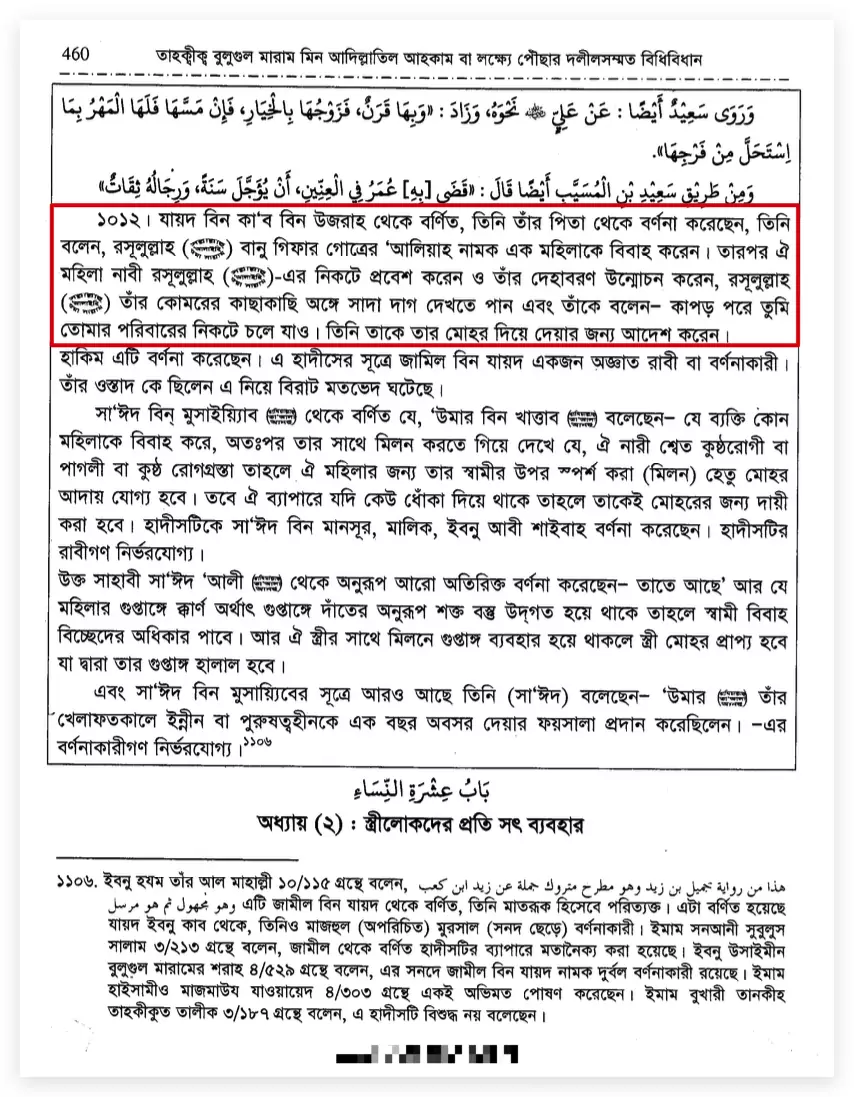
ইসলামি আইনশাস্ত্রের অন্যতম নির্ভরযোগ্য গ্রন্থ 'বুলুগুল মারাম'-এ জায়েদ বিন কাব-এর সূত্রে একটি অত্যন্ত চাঞ্চল্যকর বর্ণনা পাওয়া যায়। সেখানে বলা হয়েছে, রাসূলুল্লাহ বানু গিফার গোত্রের আলিয়া নামক এক নারীকে বিবাহ করেন। বাসর ঘরে প্রবেশের পর যখন সেই নারীর দেহাবরণ উন্মোচিত হয়, তখন মুহাম্মদ তার কোমরের কাছাকাছি অঙ্গে সাদা দাগ (ধবল বা কুষ্ঠের চিহ্ন) দেখতে পান। এই দৃশ্য দেখার পর তার প্রতিক্রিয়া ছিল অত্যন্ত রূঢ় ও তাৎক্ষণিক। তিনি কোনো প্রকার সহমর্মিতা বা চিকিৎসার আশ্বাস না দিয়ে সরাসরি নির্দেশ দেন, “কাপড় পরে তুমি তোমার পরিবারের কাছে চলে যাও” (( তাহকীক বুলুগুল মারাম মিন আদিল্লাতিল আহকাম বা লক্ষ্যে পৌঁছার দলিলসম্মত বিধিবিধান, তাওহীদ পাবলিকেশন্স, পৃষ্ঠা ৪৬০ )) -

460 তাহক্বীক্ব বুলুগুল মারাম মিন আদিল্লাতিল আহকাম বা লক্ষ্যে পৌঁছার দলীলসম্মত বিধিবিধান
وَرَوَى سَعِيدُ أَيْضًا : عَنْ عَلى الله نَحْوَهُ، وَزَادَ : وَبِهَا قَرَنٌ، فَزَوْجُهَا بِالْخِيَارِ، فَإِنْ مَسَّهَا فَلَهَا الْمَهْرُ بِمَا اسْتَحَلَّ مِنْ فَرْجِهَا». بن وَمِنْ طَرِيق سَعِيدِ : الْمُسَيَّبِ أَيْضًا قَالَ : قَضَى [به] عُمَرُ فِي الْعِنّينِ، أَنْ يُؤَجِّلَ سَنَةٌ، وَرِجَالُهُ ثِقَاتُ»
১০১২। যায়দ বিন কা'ব বিন উজরাহ থেকে বর্ণিত, তিনি তাঁর পিতা থেকে বর্ণনা করেছেন, তিনি বলেন, রসূলুল্লাহ বানু গিফার গোত্রের 'আলিয়াহ নামক এক মহিলাকে বিবাহ করেন। তারপর ঐ মহিলা নাবী রসূলুল্লাহ-এর নিকটে প্রবেশ করেন ও তাঁর দেহাবরণ উন্মোচন করেন, রসূলুল্লাহ তাঁর কোমরের কাছাকাছি অঙ্গে সাদা দাগ দেখতে পান এবং তাঁকে বলেন- কাপড় পরে তুমি তোমার পরিবারের নিকটে চলে যাও। তিনি তাকে তার মোহর দিয়ে দেয়ার জন্য আদেশ করেন । হাকিম এটি বর্ণনা করেছেন। এ হাদীসের সূত্রে জামিল বিন যায়দ একজন অজ্ঞাত রাবী বা বর্ণনাকারী তাঁর ওস্তাদ কে ছিলেন এ নিয়ে বিরাট মতভেদ ঘটেছে।
সা'ঈদ বিন্ মুসাইয়্যিাব থেকে বর্ণিত যে, উমার বিন খাত্তাব বলেছেন- যে ব্যক্তি কোন মহিলাকে বিবাহ করে, অতঃপর তার সাথে মিলন করতে গিয়ে দেখে যে, ঐ নারী শ্বেত কুষ্ঠরোগী বা পাগলী বা কুষ্ঠ রোগগ্রস্তা তাহলে ঐ মহিলার জন্য তার স্বামীর উপর স্পর্শ করা (মিলন) হেতু মোহর আদায় যোগ্য হবে। তবে ঐ ব্যাপারে যদি কেউ ধোঁকা দিয়ে থাকে তাহলে তাকেই মোহরের জন্য দায়ী করা হবে। হাদীসটিকে সা'ঈদ বিন মানসূর, মালিক, ইবনু আবী শাইবাহ বর্ণনা করেছেন। হাদীসটির রাবীগণ নির্ভরযোগ্য।
উক্ত সাহাবী সা‘ঈদ 'আলী থেকে অনুরূপ আরো অতিরিক্ত বর্ণনা করেছেন- তাতে আছে' আর যে মহিলার গুপ্তাঙ্গে ক্বার্ণ অর্থাৎ গুপ্তাঙ্গে দাঁতের অনুরূপ শক্ত বস্তু উদ্‌গত হয়ে থাকে তাহলে স্বামী বিবাহ বিচ্ছেদের অধিকার পাবে। আর ঐ স্ত্রীর সাথে মিলনে গুপ্তাঙ্গ ব্যবহার হয়ে থাকলে স্ত্রী মোহর প্রাপ্য হবে যা দ্বারা তার গুপ্তাঙ্গ হালাল হবে।
এবং সা'ঈদ বিন মুসায়্যিবের সূত্রে আরও আছে তিনি (সাঈদ) বলেছেন- 'উমার (তাঁর “খেলাফতকালে ইন্নীন বা পুরুষত্বহীনকে এক বছর অবসর দেয়ার ফয়সালা প্রদান করেছিলেন। -এর বর্ণনাকারীগণ নির্ভরযোগ্য।
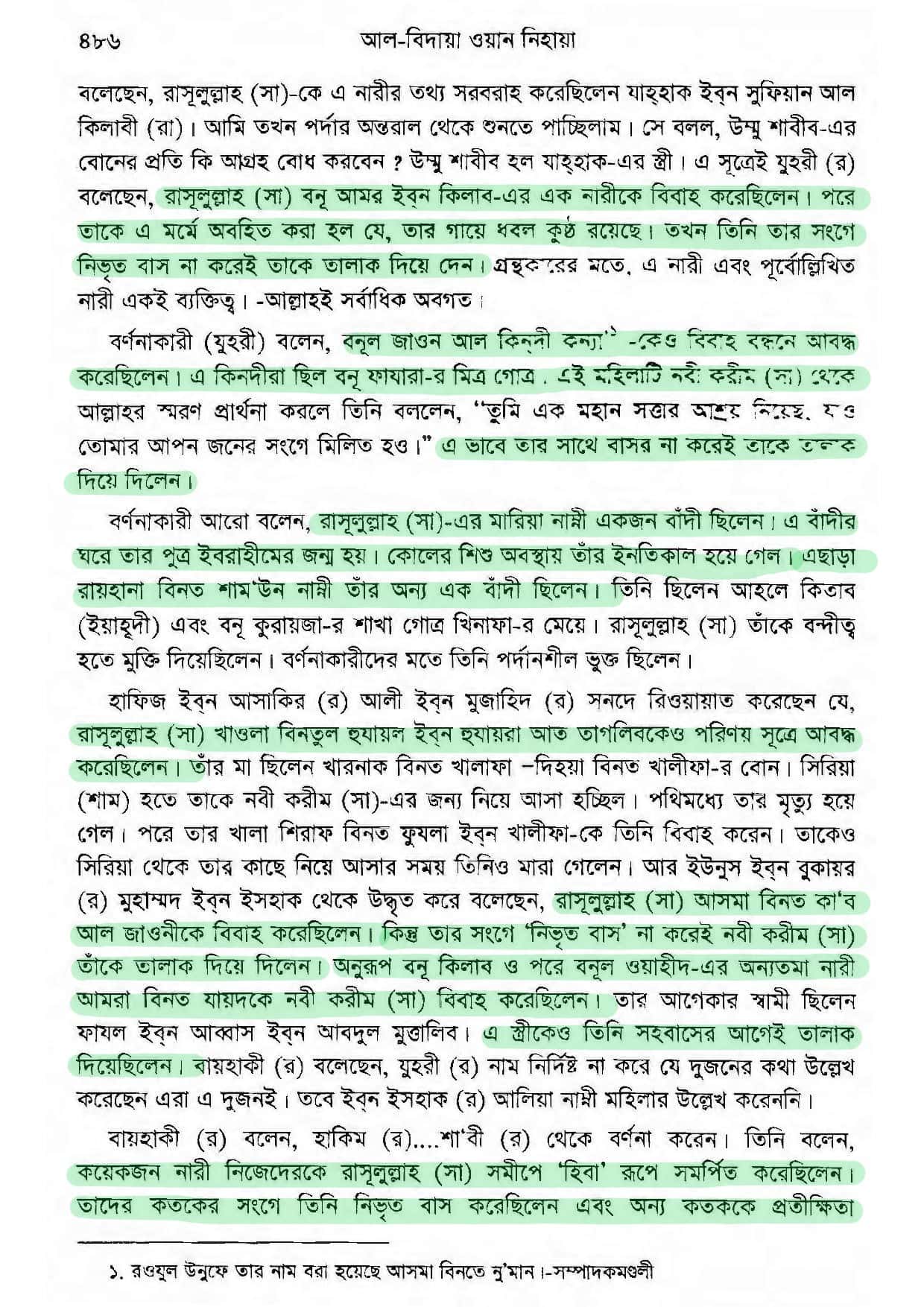
এই একই ঘটনার সত্যায়ন পাওয়া যায় বিখ্যাত ঐতিহাসিক ইবনে কাসীরের 'আল-বিদায়া ওয়ান নিহায়া' গ্রন্থেও। সেখানে উল্লেখ আছে যে, বনূ আমর ইব্‌ন কিলাব-এর এক নারীকে বিবাহ করার পর তার শরীরে ধবল কুষ্ঠের উপস্থিতির খবর পেয়ে তিনি তার সাথে নিভৃত বাস না করেই তাকে তালাক দিয়ে দেন (( আল-বিদায়া ওয়ান নিহায়া, আল্লামা ইবনে কাসীর, ইসলামিক ফাউন্ডেশন বাংলাদেশ, পঞ্চম খণ্ড, পৃষ্ঠা ৪৮৬ ))

বলেছেন, রাসূলুল্লাহ (সা)-কে এ নারীর তথ্য সরবরাহ করেছিলেন যাহ্হাক ইন সুফিয়ান আল কিলাবী (রা)। আমি তখন পর্দার অন্তরাল থেকে শুনতে পাচ্ছিলাম। সে বলল, উম্মু শাবীব-এর বোনের প্রতি কি আগ্রহ বোধ করবেন ? উম্মু শাবীব হল যাহ্হাক-এর স্ত্রী। এ সূত্রেই যুহরী (র) বলেছেন, রাসূলুল্লাহ (সা) বনূ আমর ইব্‌ন কিলাব-এর এক নারীকে বিবাহ করেছিলেন। পরে তাকে এ মর্মে অবহিত করা হল যে, তার গায়ে ধবল কুষ্ঠ রয়েছে। তখন তিনি তার সংগে নিভৃত বাস না করেই তাকে তালাক দিয়ে দেন। গ্রন্থকারের মতে, এ নারী এবং পূর্বোল্লিখিত নারী একই ব্যক্তিত্ব। -আল্লাহই সর্বাধিক অবগত।
বর্ণনাকারী (যুহরী) বলেন, বনূল জাওন আল কিন্তী কন্যা" -কেও বিবাহ বন্ধনে আবদ্ধ করেছিলেন। এ কিনদীরা ছিল বনূ ফাযারা-র মিত্র গোত্র এই মহিলাটি নবী করীম (সা) থেকে আল্লাহর স্মরণ প্রার্থনা করলে তিনি বললেন, “তুমি এক মহান সত্তার আশ্রয় নিয়েছ, যও তোমার আপন জনের সংগে মিলিত হও।" এ ভাবে তার সাথে বাসর না করেই তাকে তা দিয়ে দিলেন।
বর্ণনাকারী আরো বলেন, রাসূলুল্লাহ (সা)-এর মারিয়া নাম্নী একজন বাঁদী ছিলেন। এ বাঁদীর ঘরে তার পুত্র ইবরাহীমের জন্ম হয়। কোলের শিশু অবস্থায় তাঁর ইনতিকাল হয়ে গেল। এছাড়া রায়হানা বিনত শাম'উন নাম্নী তাঁর অন্য এক বাঁদী ছিলেন। তিনি ছিলেন আহলে কিতাব (ইয়াহুদী) এবং বনূ কুরায়জা-র শাখা গোত্র খিনাফা-র মেয়ে। রাসূলুল্লাহ (সা) তাঁকে বন্দীত্ব হতে মুক্তি দিয়েছিলেন। বর্ণনাকারীদের মতে তিনি পর্দানশীল ভুক্ত ছিলেন। হাফিজ ইবন আসাকির (র) আলী ইব্‌ন মুজাহিদ (র) সনদে রিওয়ায়াত করেছেন যে, রাসূলুল্লাহ (সা) খাওলা বিনতুল হুযায়ল ইব্‌ন হুযায়রা আত তাগলিবকেও পরিণয় সূত্রে আবদ্ধ করেছিলেন। তাঁর মা ছিলেন খারনাক বিনত খালাফা -দিহয়া বিনত খালীফা-র বোন। সিরিয়া (শাম) হতে তাকে নবী করীম (সা)-এর জন্য নিয়ে আসা হচ্ছিল। পথিমধ্যে তার মৃত্যু হয়ে গেল। পরে তার খালা শিরাফ বিনত ফুলা ইবন খালীফা-কে তিনি বিবাহ করেন। তাকেও সিরিয়া থেকে তার কাছে নিয়ে আসার সময় তিনিও মারা গেলেন। আর ইউনুস ইন বুকায়র (র) মুহাম্মদ ইব্‌ন ইসহাক থেকে উদ্ধৃত করে বলেছেন, রাসূলুল্লাহ (সা) আসমা বিনত কা'ব আল জাওনীকে বিবাহ করেছিলেন। কিন্তু তার সংগে নিভৃত বাস' না করেই নবী করীম (সা) তাঁকে তালাক দিয়ে দিলেন। অনুরূপ বনূ কিলাব ও পরে বনূল ওয়াহীদ-এর অন্যতমা নারী আমরা বিনত যায়দকে নবী করীম (সা) বিবাহ করেছিলেন। তার আগেকার স্বামী ছিলেন ফাযল ইব্‌ন আব্বাস ইবন আবদুল মুত্তালিব। এ স্ত্রীকেও তিনি সহবাসের আগেই তালাক দিয়েছিলেন। বায়হাকী (র) বলেছেন, যুহরী (র) নাম নির্দিষ্ট না করে যে দুজনের কথা উল্লেখ করেছেন এরা এ দুজনই । তবে ইবন ইসহাক (র) আলিয়া নাম্নী মহিলার উল্লেখ করেননি।
বায়হাকী (র) বলেন, হাকিম (র)….শা'বী (র) থেকে বর্ণনা করেন। তিনি বলেন, কয়েকজন নারী নিজেদেরকে রাসূলুল্লাহ (সা) সমীপে 'হিবা' রূপে সমর্পিত করেছিলেন। তাদের কতকের সংগে তিনি নিভৃত বাস করেছিলেন এবং অন্য কতককে প্রতীক্ষিতা
১. রওযুল উনুফে তার নাম বরা হয়েছে আসমা বিনতে নু'মান। সম্পাদকমণ্ডলী
এই বর্ণনাসমূহ মুহাম্মদের তথাকথিত 'মহামানবীয়' ভাবমূর্তির ওপর এক বিশাল আঘাত। প্রথাগত ইসলামি বয়ানে যেখানে দাবি করা হয় যে নবীর থুতু বা স্পর্শে জটিল ব্যাধি সেরে যেত, সেখানে বাস্তব ইতিহাসের এই নথিতে দেখা যাচ্ছে তিনি সামান্য একটি চর্মরোগ দেখে এতটাই ভীত বা বিরক্ত হয়েছিলেন যে, সেই নারীকে স্ত্রীর মর্যাদা দিতেও অস্বীকার করেন। তৎকালীন আরবের সাধারণ মানুষের মধ্যে কুষ্ঠ বা ধবল রোগ নিয়ে যে আদিম আতঙ্ক কাজ করত, মুহাম্মদের আচরণ ছিল ঠিক তেমনই সাধারণ এবং বিজ্ঞানবিবর্জিত। তিনি যে কোনো অলৌকিক ক্ষমতার অধিকারী ছিলেন না, বরং জৈবিক ভয় ও সামাজিক কুসংস্কারের দ্বারা নিয়ন্ত্রিত ছিলেন, এই ঘটনাটি তার অকাট্য প্রমাণ।

সবচেয়ে কৌতুহলোদ্দীপক বিষয় হলো, মুহাম্মদের এই ব্যক্তিগত আচরণটি পরবর্তীতে ইসলামি শরীয়াহর একটি আইনে পরিণত হয়। দ্বিতীয় খলিফা উমর ইবনুল খাত্তাব-এর একটি ফয়সালা থেকে জানা যায় যে, যদি কোনো নারী কুষ্ঠরোগী, পাগলী বা ধবল রোগে আক্রান্ত হয়, তবে স্বামী তাকে বর্জন করার বা বিবাহ বিচ্ছেদের অধিকার পাবে। অর্থাৎ, একজন অসুস্থ জীবনসঙ্গিনীর পাশে দাঁড়ানো বা তার সেবা করার মানবিক শিক্ষার পরিবর্তে মুহাম্মদ এমন একটি প্রথা চালু করে দিয়ে গেছেন, যা অসুস্থ নারীকে সামাজিকভাবে আরও বেশি হেয় ও পরিত্যক্ত করে তোলে। এটি কোনো দয়ালু বা দূরদর্শী নেতার কাজ হতে পারে না; বরং এটি একজন সাধারণ সুযোগ সন্ধানী মানুষের আচরণের প্রতিফলন, যার তথাকথিত 'মোজেজার ব্যাটারি' প্রয়োজনের সময় অকার্যকর হয়ে পড়েছিল।


তাকদীরে অগাধ বিশ্বাস বনাম সংক্রমণের আদিম ভয়

ইসলামি ধর্মতত্ত্বের একটি অন্যতম ভিত্তি হলো 'তাকদীর' বা ভাগ্যে বিশ্বাস, যেখানে শেখানো হয় যে আল্লাহর ইচ্ছা ব্যতীত কোনো রোগ বা বিপদ স্পর্শ করতে পারে না। স্বয়ং মুহাম্মদ বিভিন্ন সময়ে প্রচার করেছেন যে, "আল্লাহ যা লিখে রেখেছেন তা ছাড়া আমাদের আর কিছুই ঘটবে না" ((কোরআন ৯:৫১))। কিন্তু যখন বাস্তব জীবনের মুখোমুখি হলেন, তখন তার এই অগাধ বিশ্বাসের দাবিটি এক অদ্ভুত দ্বিচারিতার শিকার হলো। নিজের নবপরিণীতা স্ত্রীর শরীরে শ্বেতী বা কুষ্ঠের দাগ দেখার সাথে সাথেই তার সমস্ত আধ্যাত্মিক নির্ভরতা যেন কর্পূরের মতো উড়ে গেল।

১. তাকদীরের বৈপরীত্য: যদি তাকদীরের ওপর তার বিশ্বাস এতটাই অটল হতো, তবে তার মনে এই প্রশ্ন আসা উচিত ছিল যে—আল্লাহ যদি চান তবেই এই রোগ ছড়াবে, অন্যথায় নয়। কিন্তু তিনি আল্লাহর সিদ্ধান্তের ওপর ভরসা না রেখে বরং নিজের ব্যক্তিগত নিরাপত্তার ওপর জোর দিলেন। এটি প্রমাণ করে যে, জনসাধারণের জন্য তাকদীরের বয়ান থাকলেও নিজের ক্ষেত্রে তিনি ছিলেন অত্যন্ত সতর্ক এবং জাগতিক ভয়ের অধীন। তার এই আচরণ মূলত সেই বিখ্যাত হাদিসের সাথে সাংঘর্ষিক যেখানে তিনি দাবি করেছিলেন, "সংক্রমণ বা ছোঁয়াচে রোগ বলতে কিছু নেই" ((সহীহ বুখারী ৫৭৭০)) (( ইসলাম বলে ছোঁয়াচে রোগ বলে কিছু নেই ))। অথচ নিজের স্ত্রীর ক্ষেত্রে তিনি সংক্রমণের ভয়েই তাকে বর্জন করলেন। আল্লাহর ওপর তাওয়াক্কুলের কী হলো?

২. মোজেজার সীমাবদ্ধতা: ইসলামের অনুসারীরা প্রায়শই দাবি করেন, মুহাম্মদের ইচ্ছায় আকাশ ফুঁড়ে ফেরেশতা আসত, তিনি সূরা পড়ে রোগ মুক্ত করে দিতেন, তার জন্য কাঠের খণ্ড কান্নাকাটি করতো কিংবা জড় পদার্থ কথা বলত। কিন্তু একজন পরম প্রিয়তমা পত্নীর (যাকে তিনি পছন্দ করেই বিয়ে করেছিলেন) সামান্য শারীরিক সমস্যা তিনি দূর করতে পারলেন না। যে হাত দিয়ে তিনি 'চন্দ্র দ্বিখণ্ডিত' করার দাবি করেছিলেন, সেই হাতটি একজন অসুস্থ নারীর সেবায় বা তাকে সুস্থ করার প্রচেষ্টায় ব্যবহৃত হলো না। এটি আমাদের চোখে আঙুল দিয়ে দেখিয়ে দেয় যে, অলৌকিক ক্ষমতার গল্পগুলো কেবল তখনই কার্যকর থাকে যখন তা যাচাই করার কোনো উপায় থাকে না। কিন্তু ঘরের ভেতরে, বাসর ঘরে যখন বাস্তব একটি সমস্যার (চর্মরোগ) মোকাবিলা করতে হলো, তখন তার তথাকথিত 'মোজেজার ব্যাটারি' সম্পূর্ণ মৃত হয়ে পড়েছিল।

৩. মানবিকতার অভাব বনাম আতঙ্ক: একজন সাধারণ মানুষের কাছেও আমরা আশা করি যে, তিনি তার জীবনসঙ্গিনীর বিপদে পাশে দাঁড়াবেন। কিন্তু মুহাম্মদ এখানে কোনো সহমর্মিতা না দেখিয়ে বরং অত্যন্ত যান্ত্রিকভাবে তালাক দিয়ে তাকে বিদেয় করে দিলেন। এই আতঙ্ক কোনো মহামানবের বৈশিষ্ট্য হতে পারে না; বরং এটি সেই আদিম ভয়ের বহিঃপ্রকাশ, যেখানে মানুষ কুষ্ঠ বা ধবল রোগকে অপয়া বা অভিশাপ মনে করত। আল্লাহর ওপর বিশ্বাস আর অলৌকিক ক্ষমতার দম্ভ—সবই যেন এই ছোট একটি সাদা দাগের কাছে পরাজিত হলো।

এই ঘটনাটি মুহাম্মদের চরিত্রের সেই মানবিক দুর্বলতাকেই উন্মোচিত করে যা তার অনুসারীরা অলৌকিকতার প্রলেপ দিয়ে ঢাকতে চায়। যখন নিজের জীবনের বা স্বাস্থ্যের প্রশ্ন এল, তখন তিনি আর কোনো ঝুঁকি নিলেন না—না তাকদীরের ওপর, আর না নিজের মোজেজার ওপর। এই 'নিরাপদ দূরত্ব' বজায় রাখার নীতিটিই প্রমাণ করে যে, তিনি একজন অত্যন্ত সাধারণ রক্ত-মাংসের মানুষ ছিলেন, যার অলৌকিকত্বের দাবিগুলো ছিল কেবলই অলঙ্কারিক।


মোজেজার মরীচিকা এবং ঐশী শক্তির সীমাবদ্ধতা

ধর্মীয় বয়ানে নবী মুহাম্মদকে এমন এক অলৌকিক সত্তা হিসেবে তুলে ধরা হয়, যাঁর একটি ইশারায় প্রকৃতি তার গতিপথ বদলে ফেলে। আমাদের শোনানো হয়েছে খাইবার যুদ্ধে আলীর চোখে থুতু দিয়ে তাঁর চোখের রোগ সারিয়ে দেওয়ার গল্প, কিংবা আঙুলের ইশারায় চাঁদ দ্বিখণ্ডিত করার অবিশ্বাস্য কাহিনী। কিন্তু এই বিশাল 'মোজেজার ভাণ্ডার' যখন নিজের একান্ত ব্যক্তিগত জীবনে প্রয়োগ করার সময় এল, তখন দেখা গেল এক চরম শূন্যতা। বাসর ঘরে নিজের নববধূর শরীরে শ্বেতী বা কুষ্ঠের দাগ দেখে তিনি যে প্রতিক্রিয়া দেখালেন, তা কোনো অলৌকিক ক্ষমতাধর মহাপুরুষের নয়, বরং এক অত্যন্ত সাধারণ এবং আধুনিক চিকিৎসাবিজ্ঞান-পূর্ব মানসিকতার মানুষের।

১. হিলিং পাওয়ার বনাম বর্জন: যদি মুহাম্মদের কাছে সত্যিই কোনো ঐশী নিরাময় ক্ষমতা থাকত, তবে এই ঘটনাটি হতে পারত তাঁর শ্রেষ্ঠ মোজেজা প্রদর্শনের একটি ক্ষেত্র। একজন অসুস্থ নারীকে সুস্থ করে তুলে তিনি প্রমাণ করতে পারতেন যে, তাঁর নবুয়তের দাবী কেবল কাল্পনিক স্বর্গে সীমাবদ্ধ নয়, বরং তা আর্তমানবতার সেবায়ও কার্যকর। কিন্তু তিনি তা না করে 'তালাক' দেওয়ার সহজ ও নিরাপদ পথটি বেছে নিলেন। এটি অত্যন্ত জোরালোভাবে এই সত্যটিকেই প্রতিষ্ঠিত করে যে, অলৌকিক ক্ষমতার দাবিগুলো মূলত মৌখিক বর্ণনায় যতখানি শক্তিশালী, বাস্তব ও দৃশ্যমান সমস্যার সামনে ঠিক ততখানিই ঠুনকো।

২. মোজেজার 'লো ব্যাটারি' পরিস্থিতি: ব্যঙ্গাত্মকভাবে বললে, মনে হচ্ছে যেন তাঁর অলৌকিক ক্ষমতার ব্যাটারি তখন চার্জশূন্য ছিল। সাধারণত মোজেজাগুলো এমন সব ক্ষেত্রে দাবি করা হয় যেখানে যাচাই-বাছাই করার কোনো প্রত্যক্ষ সুযোগ থাকে না। কিন্তু একটি সংক্রামক ব্যাধি বা চর্মরোগ একটি 'অবজেক্টিভ' সমস্যা, যা ফাঁকি দেওয়ার সুযোগ কম। এখানে কোনো আধ্যাত্মিক ধোঁয়াশা তৈরি করার সুযোগ ছিল না বলেই সম্ভবত তিনি অলৌকিকত্বের ধার না ধেরে পার্থিব আতঙ্ককেই বড় করে দেখেছিলেন।

৩. তুলনামূলক বৈপরীত্য: অন্যান্য ধর্মীয় মিথলজিতে (যেমন যিশু বা ঈসা মসীহ) কুষ্ঠরোগীদের সুস্থ করার অনেক দাবি শোনা যায়। সেই তুলনায় মুহাম্মদ নিজেকে 'সেরা নবী' বা 'নবীদের সর্দার' হিসেবে দাবি করলেও বাস্তব প্রয়োগের ক্ষেত্রে তিনি তাঁর পূর্বসূরিদের কাল্পনিক উদারতা বা সক্ষমতাটুকুও দেখাতে পারেননি। একজন মানুষকে তার রোগের কারণে ঘৃণাভরে বর্জন করা কেবল আধ্যাত্মিক দীনতাই প্রকাশ করে না, বরং এটি প্রমাণ করে যে, অতিপ্রাকৃত শক্তির যে ঢাল দিয়ে তাঁর ইমেজ রক্ষা করা হয়, তা মূলত একটি ভঙ্গুর মরীচিকা ছাড়া আর কিছুই নয়।

এই 'তালাক' দেওয়ার ঘটনাটি মুহাম্মদের নবুওয়াতী ইমেজের ওপর এক অমোচনীয় কলঙ্ক। এটি আমাদের মনে করিয়ে দেয় যে, আকাশ ফুঁড়ে স্বর্গে যাওয়ার দাবি করা বা ফেরেশতাদের সাথে কথা বলার গালগল্প বলা সহজ, কিন্তু বাস্তব জীবনে একটি ছোট ধবল দাগের মোকাবিলা করতেও অনেক সময় তথাকথিত 'মহামানবদের' হাত-পা কাঁপতে শুরু করে।


উপসংহারঃ অলৌকিকত্বের অবসান

পরিশেষে এটি স্পষ্ট যে, মুহাম্মদের এই ব্যক্তিগত জীবনের ঘটনাটি তথাকথিত 'মহামানবীয়' ইমেজের কফিনে শেষ পেরেকটি ঠুকে দেয়। বিশ্বাসের চশমা দিয়ে আমরা যে অলৌকিক শক্তির জাদুকরকে দেখি, ইতিহাসের নির্মোহ দলিলে তিনি একজন অত্যন্ত সাধারণ, ভীত এবং আবেগতাড়িত মানুষ হিসেবেই ধরা দেন। বাসর ঘরে স্ত্রীর শরীরে ধবল বা কুষ্ঠের দাগ দেখে তাঁর এই তাৎক্ষণিক বর্জন প্রমাণ করে যে, তথাকথিত 'মোজেজা' বা 'ঐশী সুরক্ষা' কেবল লোকমুখে প্রচারিত গালগল্পের মধ্যেই সীমাবদ্ধ ছিল। যখন বাস্তব জীবনের কোনো শারীরিক ত্রুটি বা সংক্রমণের প্রশ্ন এল, তখন তাঁর সেই আকাশছোঁয়া আধ্যাত্মিক শক্তি মুহূর্তেই 'লো ব্যাটারি' সিগন্যাল দিয়ে মুখ থুবড়ে পড়ল।

তাকদীরে বিশ্বাস আর অলৌকিক ক্ষমতার দম্ভ—এই সবকিছুই ব্যর্থ হয়ে যায় যখন একজন মানুষের জৈবিক প্রবৃত্তি আর আদিম ভয় মাথাচাড়া দিয়ে ওঠে। যদি তিনি সত্যিই স্রষ্টার সবচেয়ে প্রিয় এবং অলৌকিক শক্তির অধিকারী হতেন, তবে তাঁর প্রতিক্রিয়া হতো মানবিক এবং চিকিৎসা-নির্ভর। কিন্তু তিনি সেই নারীকে কোনো সাহায্য বা সুস্থ করার প্রচেষ্টা ছাড়াই ঘৃণাভরে বর্জন করে প্রমাণ করেছেন যে, তাঁর কাছে ব্যক্তিগত সুবিধাই ছিল মুখ্য। এই ঘটনাটি আমাদের চোখে আঙুল দিয়ে দেখিয়ে দেয় যে, মহাজাগতিক সত্য বা ঐশী বাণী নিয়ে মাতামাতি করা যত সহজ, বাস্তব জীবনে একজন অসুস্থ সঙ্গিনীর পাশে দাঁড়ানো তার চেয়ে অনেক বেশি কঠিন—যেখানে তথাকথিত নবীরাও চরমভাবে ব্যর্থ হয়েছেন।

শেষ পর্যন্ত, যুক্তি ও বিজ্ঞান আমাদের শেখায় যে অলৌকিকতার কোনো বাস্তব ভিত্তি নেই। কোনো মন্ত্র বা স্পর্শে কুষ্ঠ সারে না, আর কোনো মানুষের কাছেই অদৃশ্য ফেরেশতা বাহিনী থাকে না। মুহাম্মদের এই 'ভীতি-চালিত তালাক' মূলত ধর্মীয় মিথলজির বুদবুদকে ফুটিয়ে দেয় এবং আমাদের মনে করিয়ে দেয় যে, ইতিহাসের প্রতিটি 'মহামানব' আসলে কাল্পনিক অলঙ্কারে ভূষিত একেকজন অতি সাধারণ রক্ত-মাংসের মানুষ মাত্র। অন্ধবিশ্বাসের অন্ধকার কাটিয়ে যখন আমরা যুক্তির আলোতে তাকাই, তখন অলৌকিকত্বের মরীচিকা মিলিয়ে গিয়ে কেবল রুঢ় বাস্তবতাই টিকে থাকে।

The Prophet Divorced His Wife Because of Her Illness

He supposedly even split the moon in two with a mere gesture of his finger. Yet this dearest servant of the Almighty Allah divorced his own wife — Aliyah, or one of the women of Banu Amr ibn Kilab — because she contracted leprosy. The very Prophet who supposedly possessed countless miraculous powers divorced that woman out of fear that he too might contract the same disease!

Introduction: Miracles Versus Reality

According to Islamic religious belief, the Prophet Muhammad is depicted not merely as an ordinary messenger, but as the greatest human being in the entire universe and a vessel of miraculous powers granted by Allah. In the Muslim mind, the image drawn of him is that of a superhuman being whose touch cures disease, whose gesture splits the moon in two, and who is forever protected by a host of angels. But when the pages of history and scriptural accounts reveal an incident in which this 'almighty' being, terrified of a mere skin disease, divorced his newlywed wife and pushed her away, a huge crack appears in that miraculous image.

This incident is not merely the story of a marital separation; it is the expression of a deep logical inconsistency inside the structure of belief. On the one hand stands the claim of unwavering faith in Allah's sovereign power and destiny (taqdir), and on the other, the panic at a contagious disease or physical flaw and the decision to create a safe distance — these two behaviors cannot run on the same parallel. If he truly had been Allah's most beloved and possessed divine power, the natural expectation would have been to cure the sick woman or show her human compassion. But instead he used the weapon called 'divorce' to abandon her, which essentially places a huge question mark over his claim of miracles.

In this article we will see how the myth of miraculous power and the weaknesses of worldly life created a strange contradiction in Muhammad's character. We will analyze why his so-called 'miracle' failed to work in the moment of danger, and why, instead of trusting in taqdir, he was as anxious about contagious disease as any modern human. When we strip away the wrapping of faith and judge this incident objectively, the psychology of a very ordinary and frightened human being hiding behind the superhuman image will become clear before us.


Scriptural Evidence and Historical Accounts

In one of the most reliable books of Islamic jurisprudence, 'Bulugh al-Maram', a highly sensational narration is found on the authority of Zayd ibn Ka'b. It is stated there that the Messenger of Allah married a woman named Aliyah from the tribe of Banu Ghifar. When she entered the bridal chamber and uncovered her body, Muhammad saw white spots (marks of vitiligo or leprosy) near her waist. His reaction upon seeing this was extremely harsh and immediate. Without offering any sympathy or assurance of treatment, he directly ordered: "Put on your clothes and return to your family" (( Takhqiq Bulugh al-Maram min Adillat al-Ahkam (Well-Supported Rulings for Attaining the Goal), Tawheed Publications, Page 460 )) -

460 Takhqiq Bulugh al-Maram min Adillat al-Ahkam (Well-Supported Rulings for Attaining the Goal)
وَرَوَى سَعِيدُ أَيْضًا : عَنْ عَلى الله نَحْوَهُ، وَزَادَ : وَبِهَا قَرَنٌ، فَزَوْجُهَا بِالْخِيَارِ، فَإِنْ مَسَّهَا فَلَهَا الْمَهْرُ بِمَا اسْتَحَلَّ مِنْ فَرْجِهَا». بن وَمِنْ طَرِيق سَعِيدِ : الْمُسَيَّبِ أَيْضًا قَالَ : قَضَى [به] عُمَرُ فِي الْعِنّينِ، أَنْ يُؤَجِّلَ سَنَةٌ، وَرِجَالُهُ ثِقَاتُ»
1012. Narrated from Zayd ibn Ka'b ibn Ujrah, from his father, who said: The Messenger of Allah married a woman from the tribe of Banu Ghifar named 'Aliyah. Then that woman entered upon the Messenger of Allah and uncovered her body. The Messenger of Allah saw white spots near her waist and told her — put on your clothes and return to your family. He ordered that her dower be given to her. Al-Hakim narrated this. There is great disagreement over who was the teacher of Jamil ibn Zayd, an unknown narrator in this hadith's chain.
It is narrated from Sa'id ibn al-Musayyib that Umar ibn al-Khattab said: If a man marries a woman and then, upon going to consummate the marriage, finds her to be a leukoderma patient, insane, or afflicted with leprosy, then the woman will be entitled to receive her dower from her husband for having touched (consummated with) her. But if someone deceived him in this matter, then that deceiver will be liable for the dower. This hadith was narrated by Sa'id ibn Mansur, Malik, and Ibn Abi Shaybah. The narrators of this hadith are reliable.
The aforementioned companion Sa'id narrated more from 'Ali with a similar addition — it says: if a woman has a qarn in her private part, i.e., a hard tooth-like growth protruding in her private part, then the husband will have the right to divorce. And if her private part was used in intercourse, the wife will be entitled to the dower by which her private part became lawful.
And further on the authority of Sa'id ibn al-Musayyib, he (Sa'id) said: Umar ruled, during his caliphate, that an 'innin (impotent man) be given a one-year respite. Its narrators are reliable.

Confirmation of this same incident is also found in the famous historian Ibn Kathir's 'Al-Bidaya wan Nihaya'. It is recorded there that after marrying a woman of Banu Amr ibn Kilab, upon being informed of the presence of vitiligo (leprosy) on her body, he divorced her without ever consummating the marriage (( Al-Bidaya wan Nihaya, Allama Ibn Kathir, Islamic Foundation Bangladesh, Volume 5, Page 486 ))

He said: It was Dahhak ibn Sufyan al-Kilabi (RA) who supplied the Messenger of Allah (peace be upon him) with information about this woman. I was listening from behind the curtain. He said: Would you be interested in the sister of Umm Shabib? Umm Shabib was Dahhak's wife. On the same authority, Zuhri (may Allah have mercy on him) said, The Messenger of Allah (peace be upon him) married a woman of Banu Amr ibn Kilab. Later he was informed that she had vitiligo (leprosy) on her body. So he divorced her without ever consummating the marriage. According to the author, this woman and the previously mentioned woman are the same person. -Allah knows best.
The narrator (Zuhri) said: He also married the daughter of al-Jawn al-Kindi. This Kindite woman was from the allied tribe of Banu Fazarah. When this woman sought refuge in Allah from the Prophet (peace be upon him), he said: "You have sought refuge in a Great Being; go and rejoin your own people." In this way he let her go without consummating the marriage.
The narrator further said: The Messenger of Allah (peace be upon him) had a slave girl named Mariyah. His son Ibrahim was born in her household. He passed away while still a baby in arms. He also had another slave girl named Rayhanah bint Sham'un. She was a People of the Book (a Jewess) and a daughter of the Khinafa clan, a branch of Banu Qurayzah. The Messenger of Allah (peace be upon him) freed her from captivity. According to the narrators, she was among the veiled women. Hafiz Ibn Asakir (may Allah have mercy on him) narrated on the authority of Ali ibn Mujahid (may Allah have mercy on him) that the Messenger of Allah (peace be upon him) also married Khawlah bint al-Huzayl ibn Huzayrah at-Taghlibiyyah. Her mother was Kharnaq bint Khalafah, sister of Dahyah bint Khalifah. She was being brought from Syria (Sham) for the Prophet (peace be upon him), but died on the way. Later he married her aunt Shi'raf bint Fulah ibn Khalifah. She too died while being brought to him from Syria. And Yunus ibn Bukayr (may Allah have mercy on him) quoted Muhammad ibn Ishaq as saying that the Messenger of Allah (peace be upon him) married Asma bint Ka'b al-Jawniyyah, but the Prophet (peace be upon him) divorced her without consummating the marriage. Similarly, the Prophet (peace be upon him) married Umm bint Zayd, one of the women of Banu Kilab and later of Banu al-Wahid. Her previous husband was Fadl ibn Abbas ibn Abd al-Muttalib. He divorced this wife too before intercourse. Al-Bayhaqi (may Allah have mercy on him) said: the two women Zuhri (may Allah have mercy on him) mentioned without naming are exactly these two. However, Ibn Ishaq (may Allah have mercy on him) did not mention the woman named Aliyah.
Al-Bayhaqi (may Allah have mercy on him) said: Al-Hakim (may Allah have mercy on him)... narrated from Sha'bi (may Allah have mercy on him). He said: Several women surrendered themselves to the Messenger of Allah (peace be upon him) as a 'hiba' (gift). With some of them he consummated the marriage, and the others he kept waiting
1. In Rawdh al-Unuf her name is given as Asma bint Nu'man. — Editorial Board

These narrations deal a massive blow to Muhammad's so-called 'superhuman' image. Where traditional Islamic accounts claim that the Prophet's saliva or touch cured complex diseases, the actual historical record shows that he was so frightened or disgusted by a mere skin disease that he refused to grant that woman even the dignity of a wife. The primitive terror that leprosy or vitiligo instilled in the common people of Arabia at the time — Muhammad's behavior was exactly that ordinary and unscientific. That he possessed no miraculous power at all, but was governed by biological fear and social superstition — this incident is its irrefutable proof.

The most intriguing thing is that Muhammad's personal behavior later became a law of Islamic Sharia. A ruling of the second Caliph Umar ibn al-Khattab reveals that if a woman is a leper, insane, or afflicted with vitiligo, the husband will have the right to abandon her or seek a divorce. In other words, instead of teaching the humane lesson of standing by a sick life partner and caring for her, Muhammad left behind a practice that makes sick women even more socially despised and abandoned. This cannot be the work of a merciful or far-sighted leader; rather, it is a reflection of the behavior of an ordinary opportunist, whose so-called 'battery of miracles' had gone dead when it was needed.


Unshakable Faith in Taqdir Versus the Primitive Fear of Contagion

One of the foundations of Islamic theology is belief in 'taqdir' or destiny, which teaches that no disease or calamity can touch a person except by Allah's will. Muhammad himself preached on various occasions that, "Nothing will happen to us except what Allah has written for us" (( Quran 9:51 )). But when he faced real life, this claim of unshakable faith fell victim to a strange hypocrisy. The moment he saw the spots of vitiligo or leprosy on his newlywed wife's body, all his spiritual reliance seemed to vanish like camphor.

1. The contradiction of taqdir: If his faith in taqdir had been so unshakable, the question should have occurred to him that — this disease will spread only if Allah wills it, otherwise not. But instead of relying on Allah's decree, he placed his own personal safety first. This proves that even though he preached taqdir to the masses, in his own case he was extremely cautious and subject to worldly fear. His behavior here directly contradicts the famous hadith in which he claimed, "There is no such thing as contagion or infection" (( Sahih al-Bukhari 5770 )) (( Islam says there is no such thing as contagious disease )). Yet in the case of his own wife, he abandoned her out of fear of infection. What happened to his tawakkul in Allah?

2. The limits of miracles: Followers of Islam often claim that angels tore through the sky and descended at Muhammad's will, that he cured diseases by reciting surahs, that a piece of wood wept for him, or that inanimate objects spoke. But he could not remove a trivial physical problem from his most beloved wife (whom he had married of his own choice). The hand with which he claimed to have 'split the moon in two' was never used to care for a sick woman or to try to cure her. This points a finger right in our eyes: the stories of miraculous powers remain effective only when there is no way to verify them. But inside the house, when he had to confront a real problem (a skin disease) in the bridal chamber, his so-called 'battery of miracles' lay completely dead.

3. Lack of humanity versus panic: Even from an ordinary person we expect that he will stand by his life partner in danger. But Muhammad showed no sympathy here; instead he mechanically divorced her and sent her away. Such panic cannot be the trait of a superhuman being; rather, it is the expression of that primitive fear in which people regarded leprosy or vitiligo as inauspicious or a curse. Faith in Allah and the boasting of miraculous power — all seemed to be defeated by this single small white spot.

This incident exposes the very human weakness in Muhammad's character that his followers try to cover with a veneer of miracles. When the question of his own life or health arose, he took no risk — neither trusting in taqdir, nor in his own miracles. This principle of maintaining a 'safe distance' itself proves that he was a very ordinary man of flesh and blood, whose claims of miracles were nothing but ornamentation.


The Mirage of Miracles and the Limits of Divine Power

In religious narratives, the Prophet Muhammad is presented as such a miraculous being that nature changes its course at a single gesture of his. We have been told the story of how, during the Battle of Khaybar, he cured the disease in Ali's eyes by spitting into them, or the incredible tale of splitting the moon in two with a gesture of his finger. But when the time came to apply this vast 'treasure of miracles' to his own most personal life, an extreme emptiness was revealed. The reaction he showed upon seeing the spots of vitiligo or leprosy on his bride's body in the bridal chamber was not that of a miracle-working great man, but of a very ordinary man with a pre-modern medical mindset.

1. Healing power versus abandonment: If Muhammad truly possessed any divine healing power, this incident could have been a field for demonstrating his greatest miracle. By curing a sick woman he could have proved that his claim to prophethood was not confined to an imaginary heaven, but was effective in serving suffering humanity. But instead of doing that, he chose the easy and safe path of 'divorce'. This establishes with utmost force the truth that claims of miraculous power are exactly as fragile in the face of real, visible problems as they are strong in oral narration.

2. The 'low battery' situation of miracles: To put it sarcastically, it seems as if the battery of his miraculous power was completely discharged at that moment. Miracles are generally claimed in situations where there is no direct opportunity for verification. But a contagious disease or a skin condition is an 'objective' problem, with little room for evasion. Precisely because there was no chance to create any spiritual haze here, he apparently set aside all pretense of miracles and magnified his worldly panic instead.

3. A comparative contradiction: In other religious mythologies (such as that of Jesus, or Isa the Messiah), there are many claims of curing lepers. In comparison, Muhammad, although claiming to be the 'best of prophets' or the 'leader of the prophets', could not show even a fraction of the imagined generosity or capability of his predecessors in practical application. Abandoning a person with disgust because of her disease not only reveals spiritual poverty, but it proves that the shield of supernatural power with which his image is protected is nothing but a fragile mirage.

This incident of 'divorce' is an indelible stain on Muhammad's image of prophethood. It reminds us that claiming to ascend through the heavens or spinning tales of talking with angels is easy, but when it comes to confronting even a small spot of vitiligo in real life, the hands and feet of so-called 'superhumans' begin to tremble.


Conclusion: The End of Miracles

In the end, it is clear that this incident from Muhammad's personal life drives the final nail into the coffin of the so-called 'superhuman' image. The magician of miraculous power we see through the lens of faith appears in history's dispassionate documents as a very ordinary, frightened, and emotionally driven man. His immediate abandonment upon seeing the spots of vitiligo or leprosy on his wife's body in the bridal chamber proves that the so-called 'miracle' or 'divine protection' was confined to folktales spread by word of mouth. When the question of a real physical flaw or infection arose in actual life, that sky-high spiritual power instantly signaled 'low battery' and collapsed face down.

Faith in taqdir and the boasting of miraculous power — all of this fails when a human being's biological instincts and primitive fears rear their heads. If he truly had been the Creator's most beloved, endowed with miraculous power, his reaction would have been humane and treatment-oriented. But by abandoning that woman with disgust, without any help or attempt at healing, he proved that his own personal convenience was what mattered most. This incident points a finger right in our eyes: as easy as it is to make a fuss over cosmic truths and divine revelation, it is far harder to stand by a sick partner in real life — where even so-called prophets have failed utterly.

In the end, reason and science teach us that miracles have no real foundation. No spell or touch cures leprosy, and no human being has an invisible army of angels at his side. Muhammad's 'fear-driven divorce' ultimately bursts the bubble of religious mythology and reminds us that every 'superhuman' in history is merely an ordinary human being of flesh and blood dressed in imaginary ornaments. When we cut through the darkness of blind faith and look in the light of reason, the mirage of miracles dissolves and only the harsh reality remains.

← তালিকায় ফিরে যান